
What Is Marcel van Hattem's Temperament?
He lost two elections in a row, traded a big party for a tiny one, and ran four times for a presidency he knew he wouldn't win. What strength is this, that never leaves the field?

Dois Irmãos

Marcel van Hattem was born in 1985 and grew up in Dois Irmãos, a town of German settlement in the interior of Rio Grande do Sul, a direct descendant of Dutch immigrants, raised in the Lutheran Church, where to this day he plays violin at services. He sums up what he learned there in four words: "work, responsibility, faith, family."
At 17, he decided to go into politics. No one called him: it was on his own initiative.
City councilman at 18

The following year, the Progressive Party (PP) invited him to run for a seat on the city council. In 2004, with 697 votes, Marcel became the youngest councilman in the history of Dois Irmãos.
At the same time, he was studying International Relations at UFRGS (the Federal University of Rio Grande do Sul). There, years later, he won the election for the central student council, something the left hadn't lost in forty years.
He lost. And lost again
In 2006, Marcel ran for state representative and got 11,656 votes. He wasn't elected. In 2010, he tried again, got 14,068, and once more ended up as an alternate.
Two defeats in a row are usually the end of many a young politician's career. For him, they were just the start of a longer road.
From The Hague to Oslo
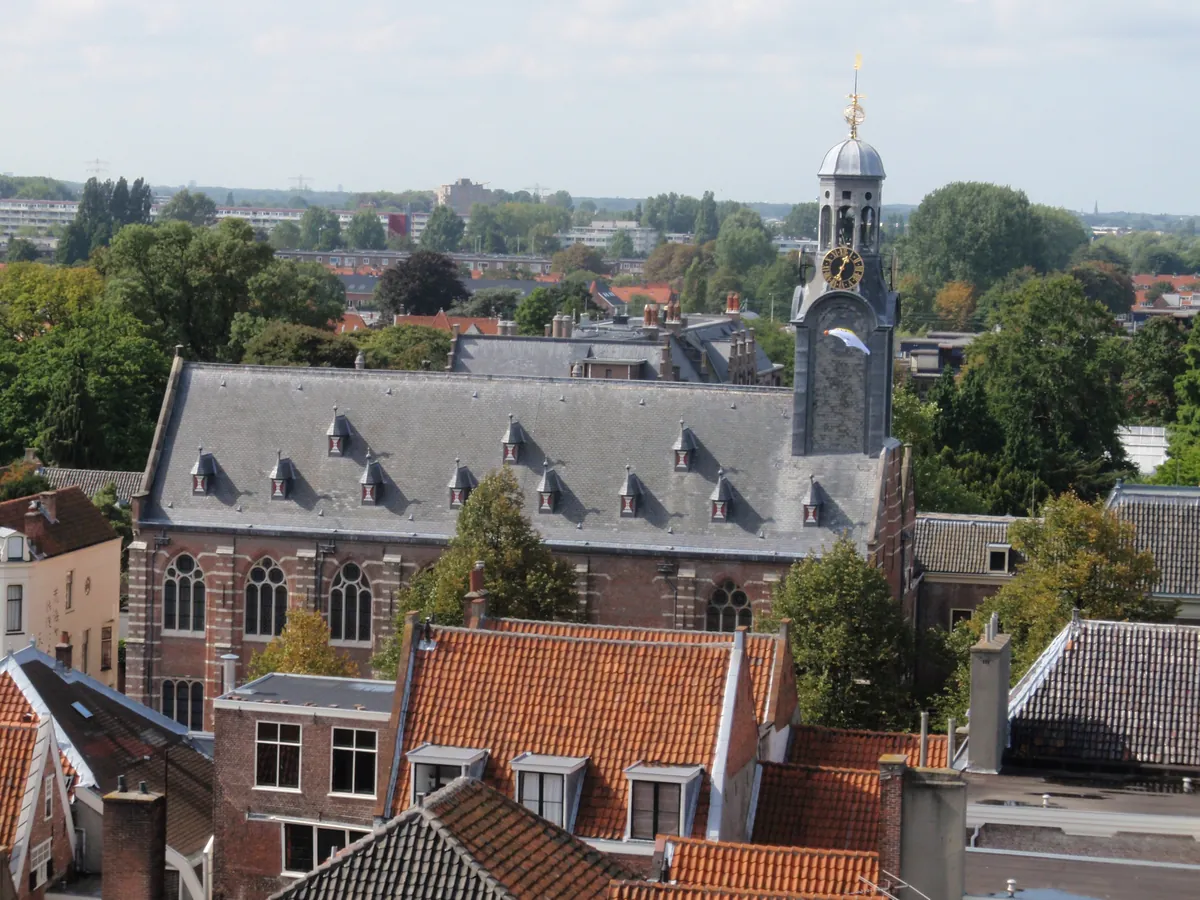
Between one defeat and the next, Marcel went off to study. He took a leadership course at Georgetown, in the United States, where he was the class speaker, and a master's in Political Science at Leiden, in the Netherlands.
Then he began a second master's, in journalism, between Denmark and Amsterdam, worked at the Dutch Ministry of Economic Affairs in The Hague, and was a correspondent in Oslo for Brazilian newspapers. He had a career made in Europe.
He could have stayed

In 2013, Marcel put his master's on hold and returned to Brazil. He had the chance to stay abroad, with study, work, and a quiet life, and he chose to come back to politics in Rio Grande do Sul, where he had collected nothing but defeats.
The means had changed: now he was coming back with a different education, different contacts, and a different view of the country. The goal remained the same.
The megaphone

On August 31, 2014, in the middle of the campaign, Marcel was holding a megaphone in Redenção Park, in Porto Alegre, when he ran right into congresswoman Maria do Rosário. He didn't think twice: he turned the megaphone toward her and accused her of defending criminals.
The video spread across social media. Afterward, he explained: "She has the right to defend criminals, I have the right to say what she defends and to want more security."
The youngest representative in the Assembly

That year, Marcel got 35,345 votes and was left as first alternate. In February 2015, he took the seat and became the youngest representative in the Legislative Assembly of Rio Grande do Sul.
After two defeats and a spot as alternate, he finally had a rostrum. And he would soon use it against his own party.
"The PP in Brasília is extremely corrupt."
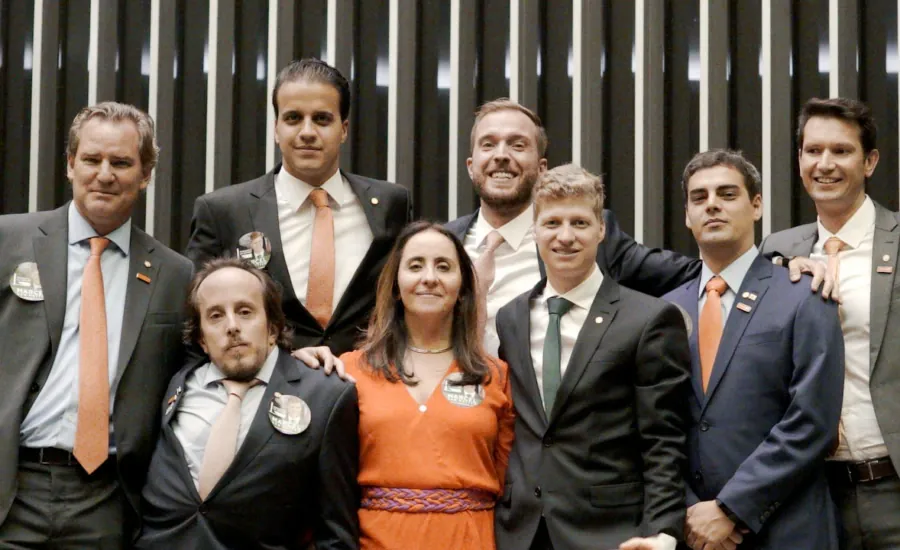
In February 2018, Marcel left the PP, a big party with a strong structure in Rio Grande do Sul, to join Novo, which was still small and had never elected a federal congressman.
And he didn't leave quietly: "The PP in Brasília is extremely corrupt. I can't believe I can defend liberal ideals in Brasília within the PP." He traded the security of the structure for coherence.
349,855 votes

In October 2018, running for the tiny party, Marcel got 349,855 votes and was the most-voted federal congressman in Rio Grande do Sul. By February 2019, he was already the leader of the Novo caucus in the Chamber.
The victory came, but what it reveals is the decision before it: he risked everything when the result was not yet guaranteed.
It isn't confrontation for its own sake

In 2021, with the country divided, the opposition was calling for Bolsonaro's impeachment, and Marcel refused to support it. For him, the requests did not present a clearly defined impeachable offense, and impeachment without a crime would be turmoil in a democracy.
The man with the megaphone also knows how to hold back the blow when he sees no grounds for landing it. His readiness to confront has a direction: it isn't fighting for sport.
Four nearly impossible races

Marcel ran for president of the Chamber four times, always against the big blocs. In 2019, he got 23 votes. In 2021, 13. In 2023, 19. In 2025, 31.
He never had a real chance of winning. Even so, he came back to the floor every two years and asked each colleague for their vote, one by one.
"The greatest achievement."

In February 2025, Hugo Motta was elected with 444 votes, and Marcel got 31. In his speech after the defeat, he said: "I know the feeling should be sadness, because we didn't win, but for the first time, it was the greatest achievement for us to reach 31 votes against the system."
He hadn't won. But he had advanced, and for him that was enough to keep going.
"A medal of honor."

In August 2025, Marcel occupied a seat at the Chamber's presiding board to press for a vote on the amnesty. In 2026, the Ethics Council approved his suspension for 60 days, and the PGR (Brazil's Office of the Prosecutor General) charged him for having called a Federal Police chief a "coward."
He didn't back down one millimeter: "If that injustice comes, we'll frame it and hang it on the wall as a medal of honor."
The same megaphone

In 2026, by then a candidate for the Senate, Marcel went back to Redenção Park with the same megaphone from twelve years earlier. "We came here to Redenção Park with this megaphone and ran into Maria do Rosário here," he recalled.
And he added: "Since then, Brazil has woken up and hasn't left the streets." The young alternate was now running for a seat in the Senate.
3,449,053 votes

On October 4, 2026, Marcel van Hattem was elected senator for Rio Grande do Sul with 3,449,053 votes, 30.08% of the valid votes. On the night of the victory, he warned: "We are going to put the Supreme Court in its place."
The 18-year-old councilman, defeated twice, reached the Senate. But it wasn't the victory that revealed his temperament: it was the road to it. What temperament can be recognized on that road?
Pure Choleric

By Axis Ratio, Marcel van Hattem's temperament is pure choleric.
In him, the sequence is simple: obstacle, mobilization, action, result. Before any wall, the question that drives him is just one: is there something I can do? If there is, he does it. He lost, studied, and came back; he switched parties; he ran for what he couldn't win; and he celebrated every step forward.
The pure choleric is lightning: it goes straight to the point.
The strength that comes from the choleric genus

Like every choleric, Marcel shows:
- Initiative: he went into politics at 17, without anyone calling him.
- Confrontation: he turned the megaphone on Maria do Rosário.
- Reaction to opposition: he occupied the Chamber's presiding board to press for the amnesty.
- Persistence in the face of obstacles: he lost twice and came back; he ran four times.
- A drive for effectiveness: he wants to see real effect in every action.
It's the strength of the genus, and in him it appears unmixed.
The distinctive way of the pure choleric

As a pure choleric, this strength comes with:
- Straight to the point: he says what he thinks without beating around the bush, even about his own party.
- Progress is enough: he celebrated 31 votes because he saw that he had advanced.
- Stamina for the long road: twenty years between the city council and the Senate.
- Study as a tool: Leiden and Georgetown, without staying in academia.
- Courage in the face of the cost: he holds his position even while under prosecution.
This is how the pure choleric is recognized: the obstacle doesn't take him off the field, it shows him where to act.
The obstacle doesn't take him off the field

Marcel van Hattem is this strength that goes straight to the point: the 18-year-old councilman who lost two elections, left Europe to come back, confronted Maria do Rosário with a megaphone, traded the big party for the tiny one, ran four times for what he couldn't win, and celebrated every step forward, until he reached the Senate.
@marcelvanhattem, do you recognize yourself in this reading?
What's your guess?