
What Is Jair Bolsonaro's Temperament?
Before reaching the Presidency, he threw himself into a lagoon to save a soldier, dove for two days straight searching for the victims of a bus crash, and was jailed for defending the troops' pay. In each of these scenes, he did the same thing. What kind of disposition is that?

Many people only know Jair Bolsonaro from the news, and the news usually shows just one thing: the loss of temper. But when you look at his whole life, from his childhood in the Ribeira Valley to his house arrest today, a different picture appears. There is a strength that runs toward what is hard, and, when it gets there, insists that people check what it did: the tooth, the pay table, the vote.
The boy who asked questions to understand
In Eldorado, in the Ribeira Valley, Valdemir Vegini, his physics and chemistry teacher, remembered a student who asked questions, not to show off, but to understand the material. A classmate, Haroldo Coutinho, describes him as observant, studious, and playful. His friends called him Palmito.
Someone who only wants to pass memorizes what will be on the test. But the boy who interrupts class to understand is after something else, because, for him, the only knowledge worth having is knowledge you know properly.
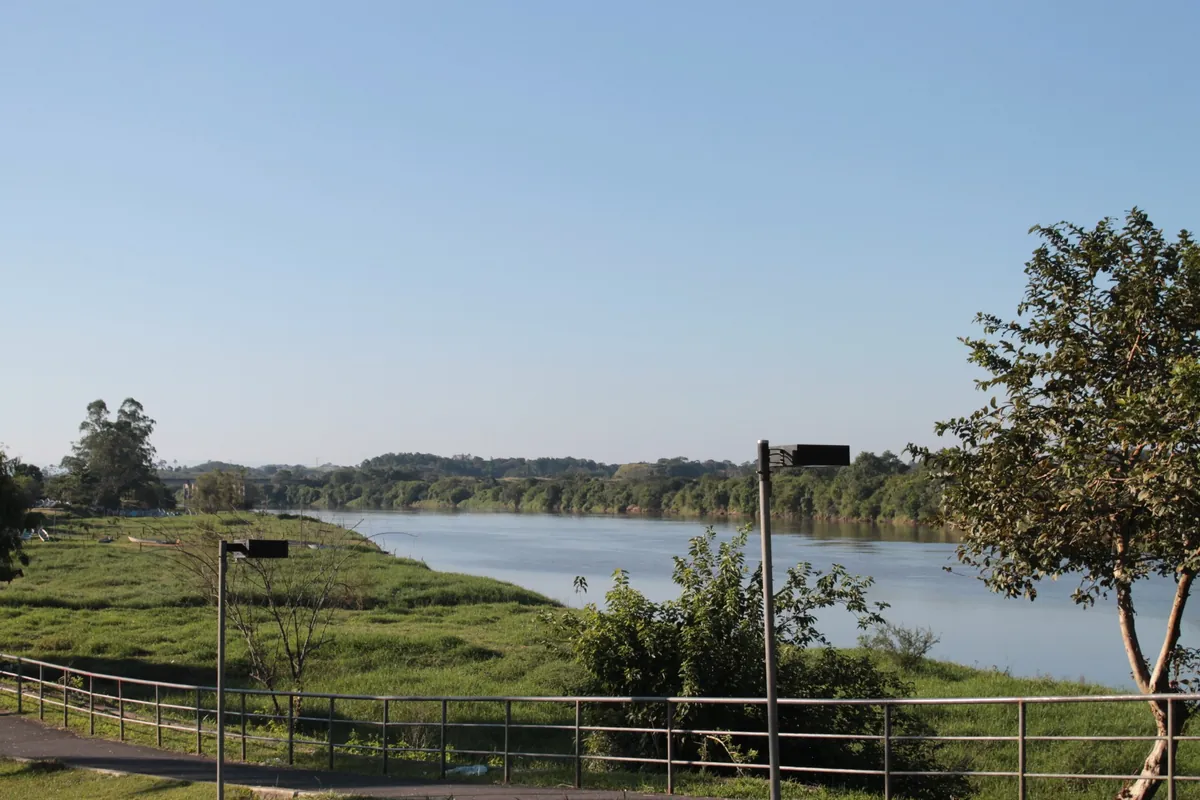
Jair fished in the Ribeira with Gilmar Alves, a childhood friend. The two of them bought a fishing rod, went to the river often, and sold part of what they caught. Gilmar says the income was split equally, and that this money helped him pay for school. No one was keeping an eye on two boys by the river, and the split could have tilted toward whoever was stronger. It didn't, because, from early on, what was agreed had a measure, and the measure applied to both sides.
His friends went to the dance. He studied.
Bolsonaro says his interest in the Army was born in 1970, when he saw troops passing through the region. Gilmar remembers the weekends when the two of them studied while the others went to dances, and says Jair pulled him along to follow the same path.
In 1973, he entered the Army Cadet Preparatory School and, in 1977, graduated as an officer from the Agulhas Negras Military Academy. The boy from Eldorado saw a door, measured what it would take to get through it, and paid the price, because the dance could wait and the exam couldn't.

He threw himself into the lagoon
In 1978, freshly graduated, Bolsonaro was overseeing a training exercise when a soldier fell off the rope into the middle of the course's lagoon. According to Sergeant Jorge Mion, who was there, the young man would have drowned if the officer cadet hadn't thrown himself into the water.
Forty years later, in December 2018, the Army awarded him the Peacemaker Medal with Palm for that rescue. No one thinks much when someone is drowning, and that is exactly where temperament shows: his body went toward the hard thing before any calculation.
First out of 37
At the Aman (the Agulhas Negras Military Academy), Bolsonaro received nine commendations for "effort, tenacity, grit, zeal, and dedication" in physical training. In 1982, he finished the Army School of Physical Education with a grade of 8.7, first among 37 students.
That same year, at the 9th Army Olympics, an official commendation recorded the "meticulous care" with which he supported those in charge of the military pentathlon, and rated him as impartial. He wasn't content to run faster than the others: he wanted the event, his and everyone else's, to be done well.

A cavity almost kept him out of paratrooper training
According to biographer Clóvis Saint-Clair, a cavity nearly barred Bolsonaro from the paratrooper course. He pooled money with his fellow soldiers, had the tooth treated, and, when challenging the disqualification, asked for one simple thing: that they check.
He took the course in 1977 and, by 1987, had logged 44 jumps. It was among the paratroopers that he heard the battle cry "Brazil above everything," which forty years later would give its name to his campaign. His way of fighting was already there: instead of just complaining, he fixed the flaw and put the proof on the table.
He dove for two days straight
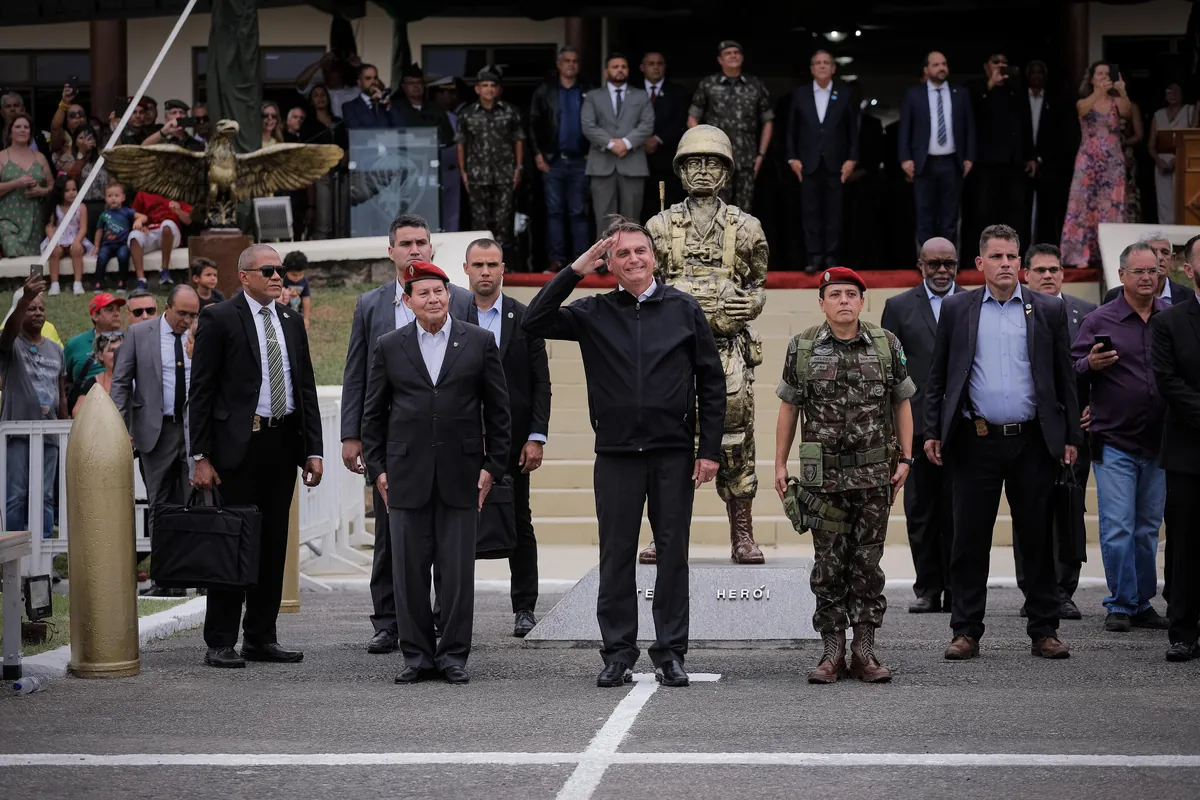
In September 1985, a Cometa bus plunged into the Vigário stream, in the Serra das Araras, in the state of Rio. Bolsonaro was on vacation and volunteered. According to Lieutenant Djalma de Souza Filho, of the Fire Department, he worked two days straight, on dives of up to 20 meters, without being relieved.
And he asked that his participation not be recorded. He had taken the firefighters' own scuba diving course, and what he had trained for so demandingly went, when it was needed, to the bottom of the water, not into his file.
Years later, that same diving became an inheritance. On vacations, the family camped at Tarituba, on the coast of Paraty, and it was the father who went into the water with the boys. Flávio says it was with him that he learned to dive, and he still does it today.

He was jailed for defending the troops' pay
On September 3, 1986, Captain Bolsonaro signed the article "The Pay Is Low" in Veja. He challenged the official explanation for cadets and officers leaving the service and, to prove what he was saying, laid out the pay table: item by item, deduction by deduction.
The Army punished him with 15 days in the stockade. He could have just vented, but he did the math, and put the math where any reader could check it, because, for him, confronting is not enough: the confrontation has to be right.
The barracks was still inside him
In the 2018 campaign, aides slept on camping mats in Bolsonaro's apartment to save on hotels. According to piauí magazine, he liked to wake them with a barracks bugle call recorded on his phone.
The scene is funny and says a lot. The captain had left the Army thirty years earlier, but the barracks was still inside him: a set time to wake up, money counted, and a joke only someone who has lived barracks life understands.
He wanted a vote that could be checked
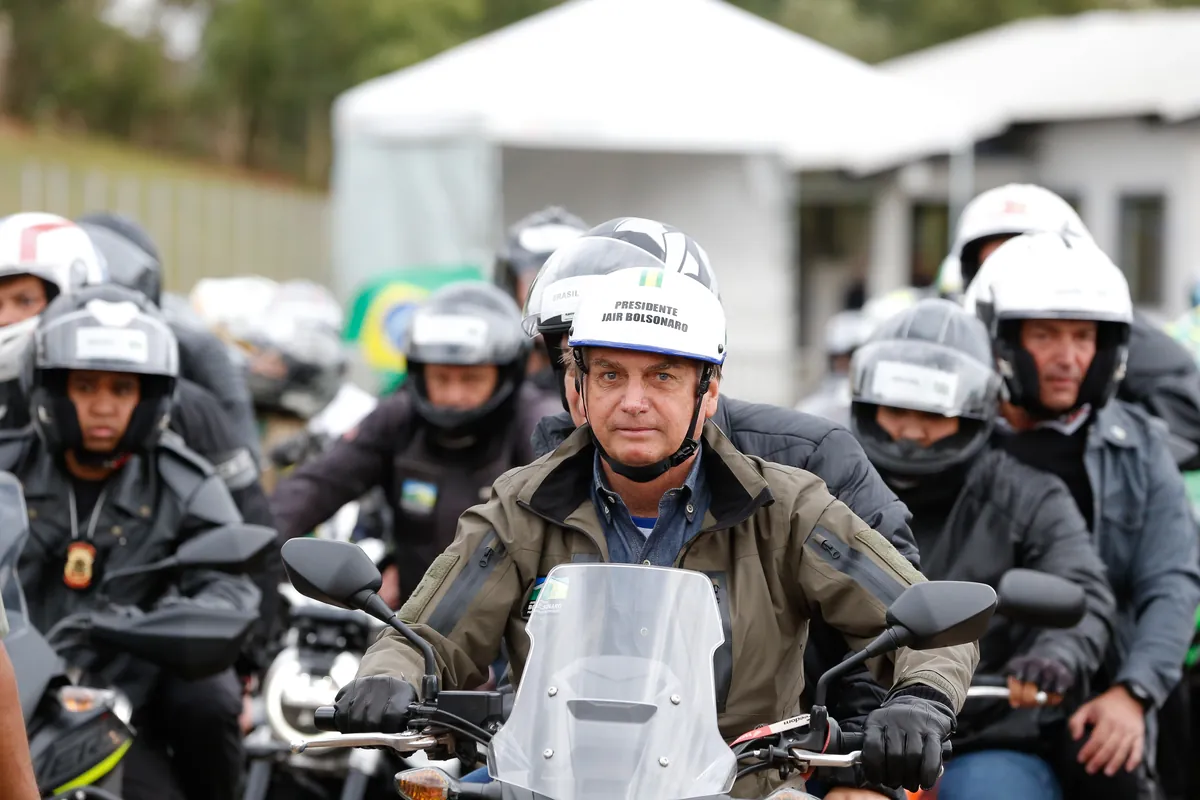
In 2015, Congressman Bolsonaro introduced the amendment requiring the electronic voting machine to print the vote, so it could be checked. Dilma vetoed it, citing the cost, and, on November 18, 2015, Congress overrode the veto with 368 congressmen and 56 senators. In 2018, the STF (Brazil's Supreme Federal Court) suspended the rule.
It's the same thing as the tooth and the pay table, now on a national scale. He was never satisfied with "trust me": his whole life, he wanted a measure anyone could verify with their own eyes.

The stabbing didn't take him out of the race
On September 6, 2018, in Juiz de Fora, Bolsonaro was stabbed in the middle of the crowd and reached the hospital hovering between life and death. He spent the rest of the campaign recovering from surgery, away from the streets and the debates.
On October 28, 52 days later, he was elected president with 57,797,847 votes. The obstacle that would have taken anyone out of the race became, in him, one more reason to keep going, because the choleric doesn't back down before what is hard: that is exactly where he finds his strength.

He gave an account every Thursday
During his Presidency, Bolsonaro did a live broadcast on social media almost every Thursday night. Seated at a simple table, next to ministers and a sign language interpreter, he presented numbers, answered criticism, and explained the week's decisions.
No law required him to do it. He did it like the captain of 1986, who didn't ask people to believe him, but opened up the math for them to check.

He went back to see his mother
In August 2021, Bolsonaro went to Eldorado to visit Olinda, then 94, accompanied by his three eldest sons. Afterward, he spoke about the change in the way she recognized him.
For a man used to solving things, there are situations no strength can solve. Before his aging mother, what was called for was to be there, and he went, because the energy that ran toward what is hard also knew how to stay quiet beside those he loved.
Today, he is in prison

At 71, Bolsonaro is serving his sentence under house arrest, by order of Alexandre de Moraes, with his health weakened and Michelle caring for him closely.
The man who asked them to check the tooth, the pay table, and the vote was convicted by a Justice system that does not allow itself to be checked: an impossible crime, in a decision that no other court can review. All it takes is the opinion of those who judge according to whoever put them there.
His strength is contained, but it cannot be erased, and millions of Brazilians still see in him the captain who gives his life to save Brazil.
The temperament: choleric-melancholic
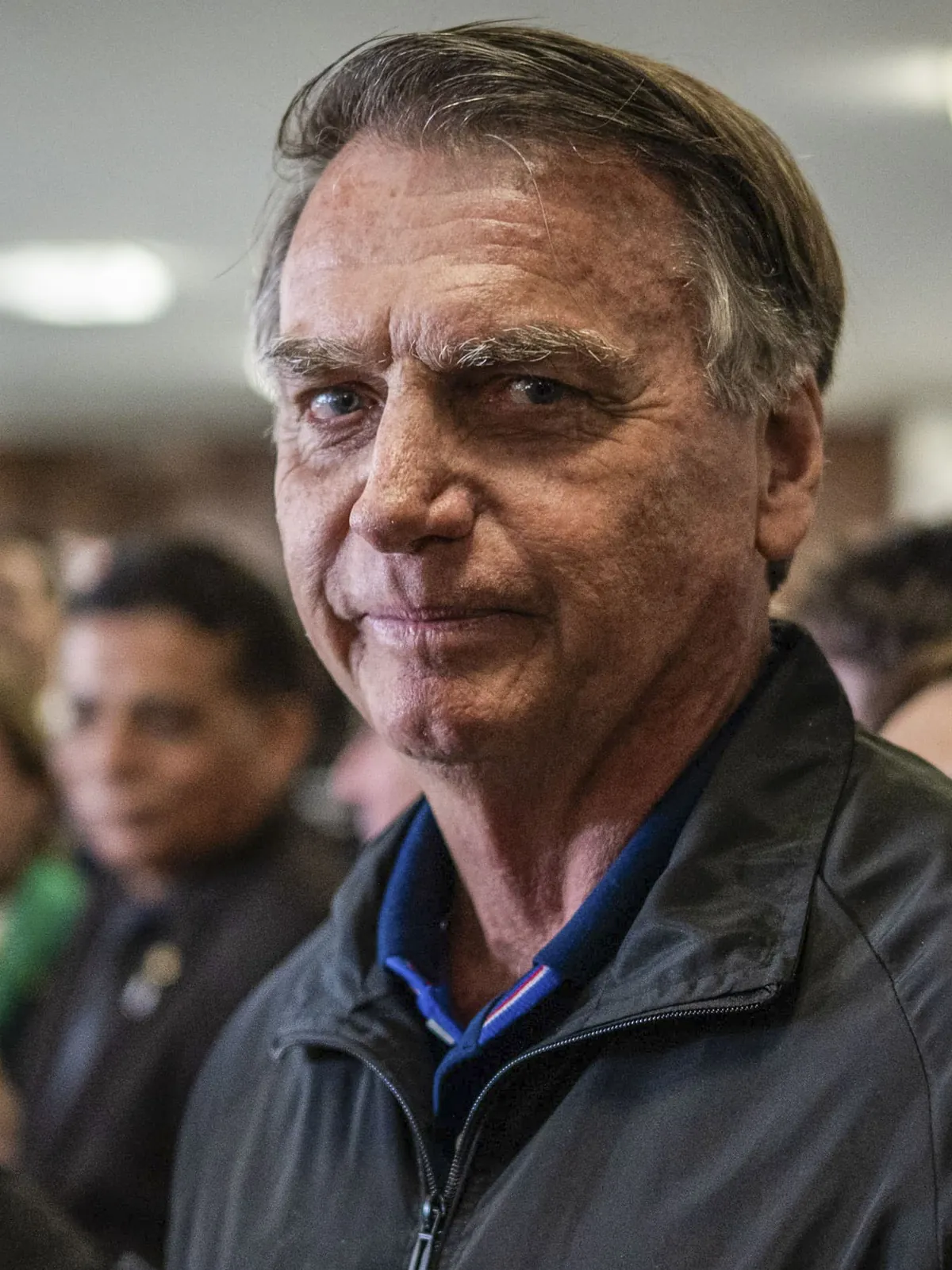
By Axis Ratio, the most coherent reading of Jair Bolsonaro's life is that he is choleric-melancholic.
The choleric strength rules: faced with what is hard, he goes. The melancholic measure comes to serve that strength: it isn't enough to do it, it has to be done well, and shown to be right.
Many people see only the loss of temper. His life shows something else: the strength that throws itself into the water, fixes the tooth, does the math, and asks people to check, and that, well formed, is the raw material of the virtue of fortitude.
The symbol of the choleric-melancholic is the closed circuit: the energy runs at full force, but within a path that checks every point.
The marks of the choleric genus
Every choleric has a natural inclination toward the arduous, and in Bolsonaro it shows up like this:
- Readiness: in 1978, he threw himself into the lagoon to save a soldier.
- Confrontation: he signed an article against the high command and paid for it with 15 days in the stockade.
- Endurance: he dove for two days straight, without being relieved.
- Courage in the face of difficulty: he was stabbed and, 52 days later, was elected president.
In none of these scenes did the difficulty make him back down; it was exactly what set him in motion.
The marks of the Choleric-Melancholic
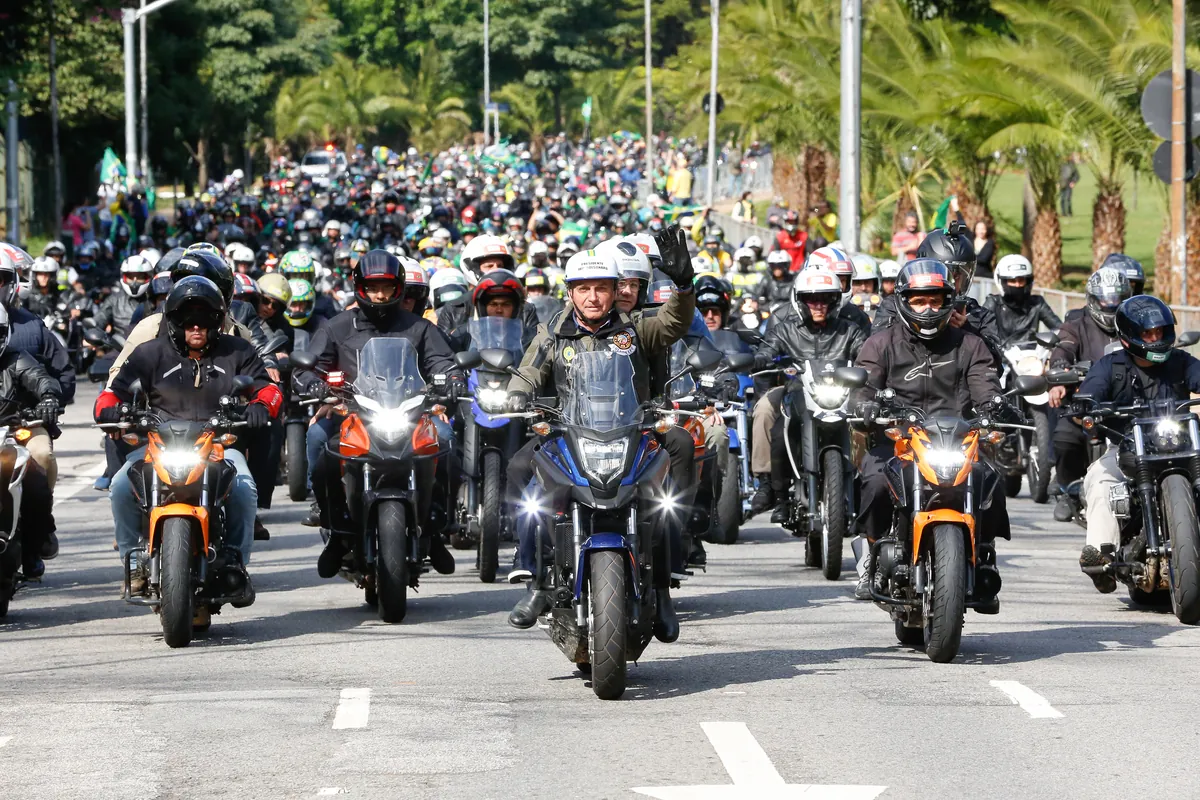
In the choleric-melancholic, strength comes with a standard. In Bolsonaro:
- Demanding in execution: he was first among 37 at the Army School of Physical Education.
- Meticulous care: that is exactly how he was commended for his work at the 9th Army Olympics.
- Precision: he challenged the high command with the pay table, item by item.
- Courage to stand against everyone: he took on the high command, the press, and the system alone, risking his career and his freedom.
That's why, for him, being right was never enough: he had to show the math.
The strength that asks to be checked
Who knows why Dilma wanted so badly to veto the printed vote, and the STF to strike it down, if Brazil is almost alone among democracies in voting without being able to check the vote?
Who knows, instead of being unjustly imprisoned, he might be finishing his second term. Without the check of the printed vote, we will never know.
Sometimes the question isn't whether he deserves to be president. It's whether Brazil deserves Bolsonaro.
May God give him health and strength.