
Explaining temperament through the elements is nonsense, and I'll prove it to you
Fire, air, water and earth were once the physics of the world. The physics fell, and the table went on telling you who you are. Tradition has a name for that, and it is not a compliment.
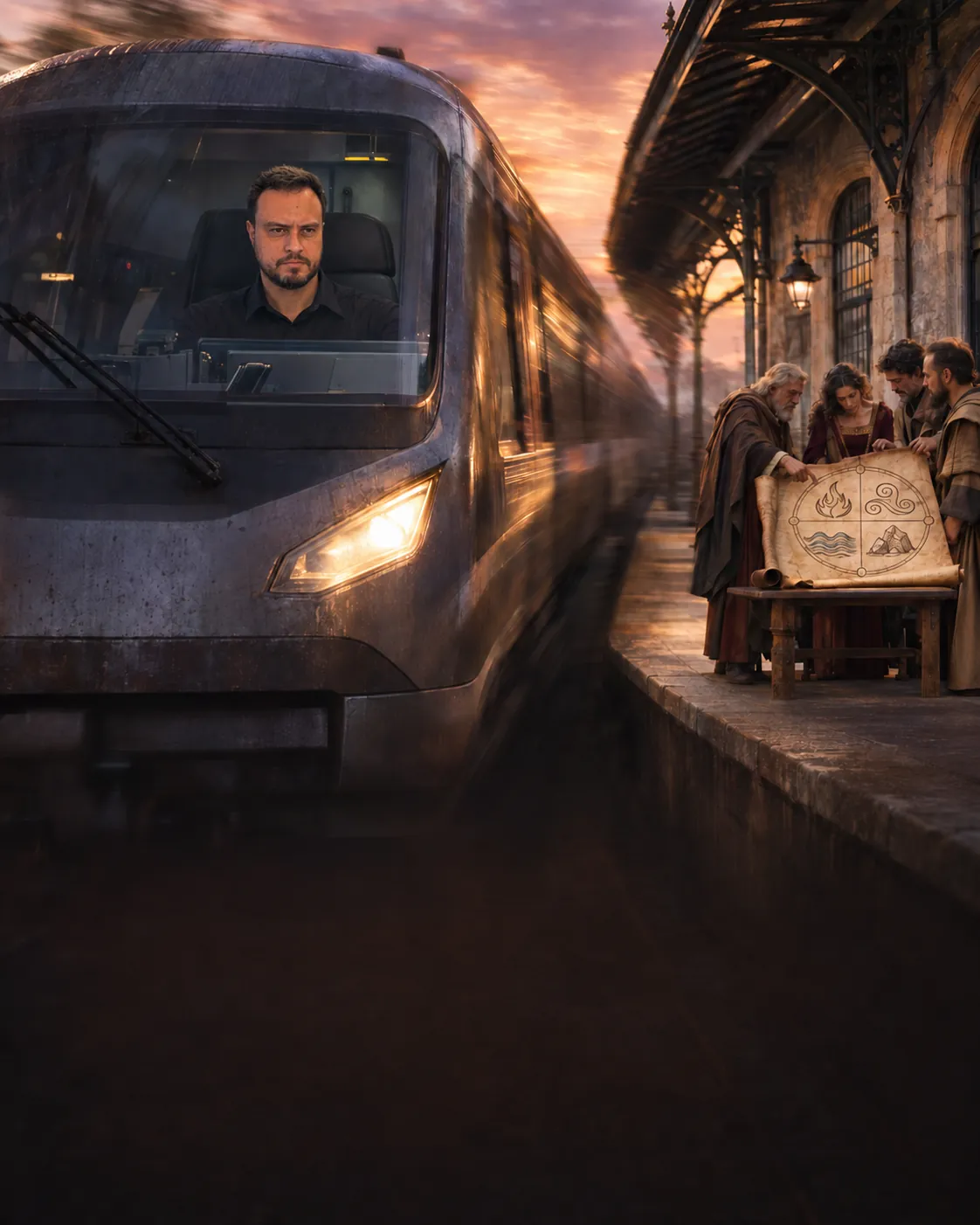
"The choleric is fire. The phlegmatic is water."



You have seen this table: the choleric is fire, the sanguine is air, the phlegmatic is water and the melancholic is earth. And the conclusions follow right away. The choleric explodes because he is fire, the phlegmatic adapts because he is water, the melancholic weighs heavy because he is earth.
The table looks ancient and wise, so almost no one asks where it came from or what holds it up. But that question changes everything, because the answer shows that the "because" in those sentences has nothing left behind it.
In the beginning, it was physics
In the fifth century before Christ, Empedocles taught that all things are made of four roots: fire, air, water and earth. Later, Aristotle explained the elements by four qualities: fire is hot and dry, air is hot and moist, water is cold and moist, earth is cold and dry.
Nobody there was writing poetry. It was the explanation of what the world is made of, and that is why those words carried weight: to say something was hot was to state something about its composition.
Then it became medicine
In the writings attributed to Hippocrates, health depended on the right proportion of four humors in the body: blood, phlegm, yellow bile and black bile. Galen, in the second century, spoke of nine mixtures of the body and linked those mixtures to the powers of the soul.
But neither Hippocrates nor Galen wrote the four portraits you know, with the irritable choleric and the sad melancholic. What the two of them had was a single idea: the body is made of the elements, and the mixture of the body inclines the soul.
The four portraits were born from false texts
Centuries after Galen, possibly in the schools of Alexandria, someone gave each humor a portrait of character, and those texts circulated under names that were not their authors'.
There is a Pseudo-Galen, On the Humors, and a treatise "from Hippocrates to his disciple Galen", as if Hippocrates were writing to a man born six hundred years after him. The one who reconstructed this history was the Hellenist Jacques Jouanna, in 2005. In other words, the table of temperaments was born with a forged signature.
The table reached Saint Bede as if it were ancient medicine
In Latin, this tradition even circulated in a letter attributed to Vindician, a physician and friend of Saint Augustine, which Jouanna considers the work of a forger. Saint Bede received it as an inheritance from the ancients and, in 725, fitted it into the order of the world: he called man a microcosm and paired each humor with a season and a couple of qualities.
That is why blood, hot and moist, ended up with spring and with air, and made people "cheerful, merciful, much given to laughter and to talk". Bede did not invent the table: the information reached him already wrong, and he made the association in good faith.
When the physics fell, the table stayed
In 1628, Harvey showed how blood circulates. In 1789, Lavoisier described water as made of hydrogen and oxygen and air as a mixture of gases. In 1869, Mendeleev organized the periodic table, which today has 118 elements, and none of them is called fire.
Medicine abandoned the humors, and chemistry abandoned the four elements. But the table of temperaments kept circulating with the same conclusions, as if the cause that held them up were still standing.
This has a name: superstition
René Guénon, a scholar of the ancient traditions and far from Catholic, recalled the exact sense of the word. Superstition comes from the Latin superstitio, "what stands over", and means "what survives itself", the "dead letter".
It is not an insult: it is a description. Superstition is the form that stays standing after the understanding that gave it meaning has been lost. And that is exactly what happens when someone says you explode because you are fire, without believing any of what once held that sentence up.
The ancient error made more sense than today's table
In the end, Saint Bede got the phenomenon right and the explanation wrong. The dispositions he described exist, but he placed their cause in the humors and the elements, because that was what the science of his time taught. He had no way of getting it right.
Whoever uses the table today does not believe his body has more fire than his neighbor's. He has dropped the premise and kept the conclusion, and he already knows what Bede could not know. That is why we are not forgiven for erring as he did.
The table changes depending on who tells it
In Vindician's letter, the phlegmatic was "wakeful". In Bede, he became "sleepy", and Bede's version won: that is where the phlegmatic's reputation for laziness, which he carries to this day, comes from. Guénon, who took the traditional correspondences seriously, went further and wrote that "the sanguine temperament corresponds to fire"*, not to air.
* René Guénon, Formas tradicionales y ciclos cósmicos (Spanish edition), ch. "Algunas observaciones sobre el nombre Adam" (Omnia Veritas, 2018). Originally published in Le Voile d'Isis, Dec. 1931.
If the same temperament can be wakeful or sleepy, air or fire, depending on who copies it, the element is not reading the person. The author is the one choosing, and the table only hands his choice back to him dressed up as a law of nature.
Each element fits any temperament
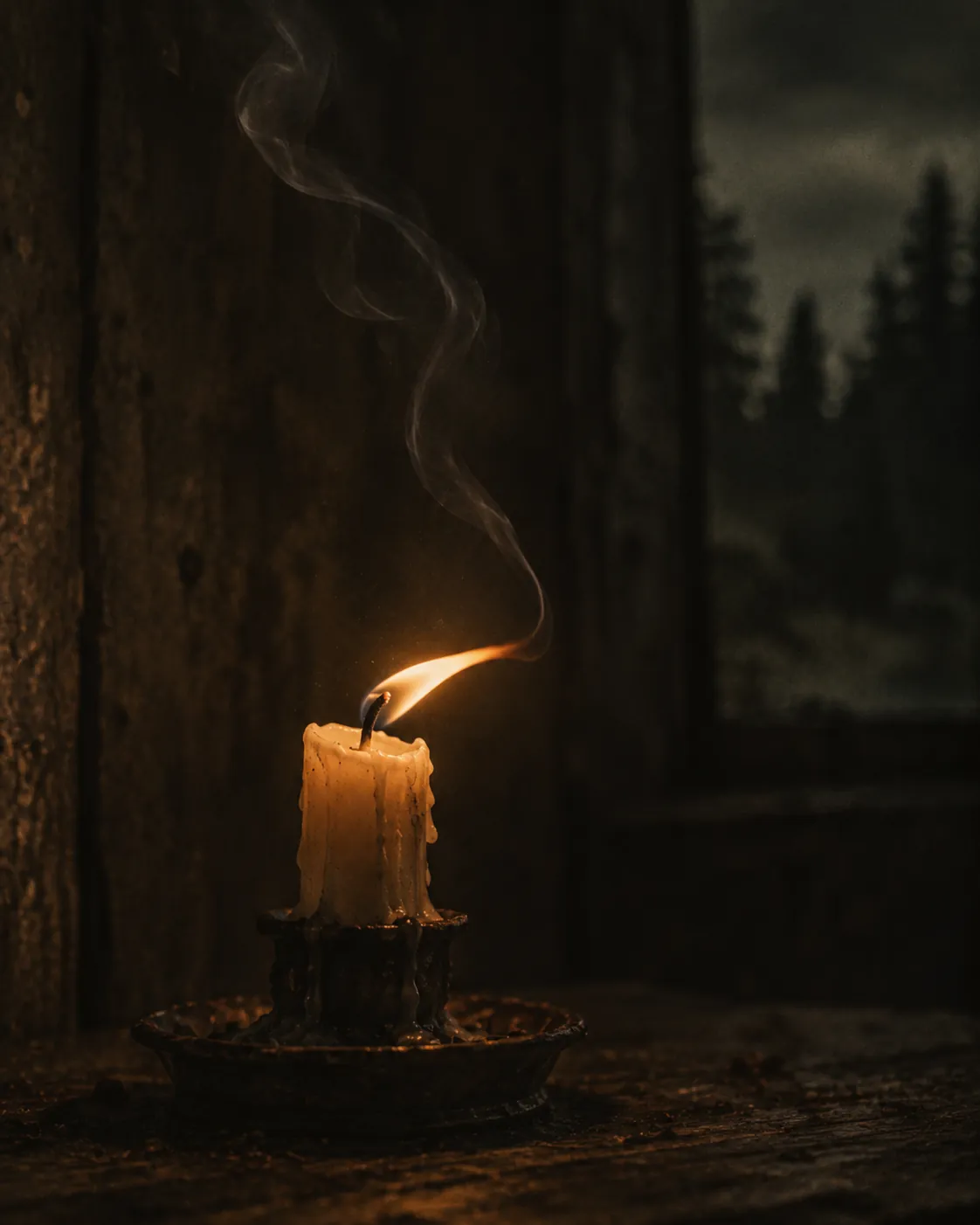

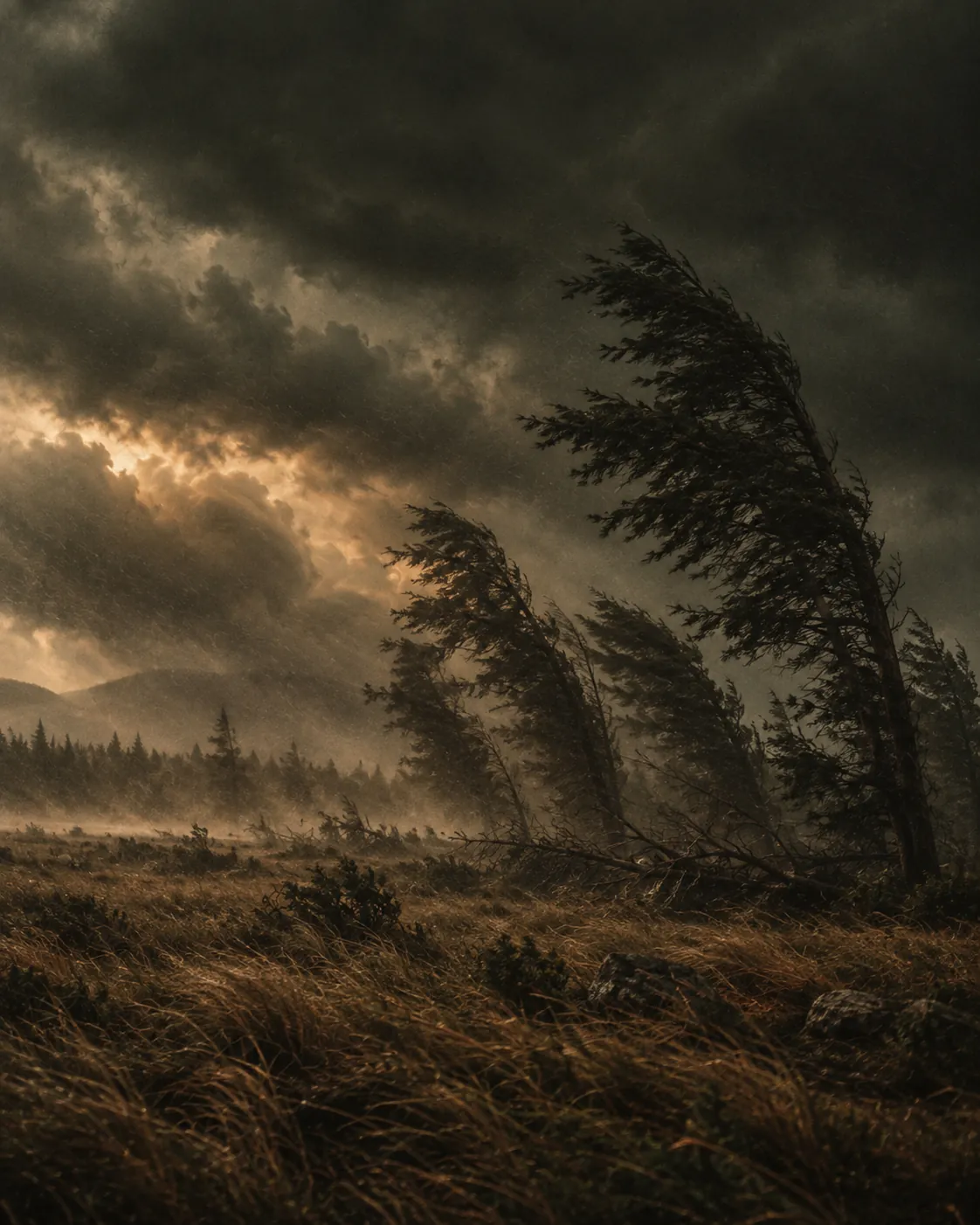
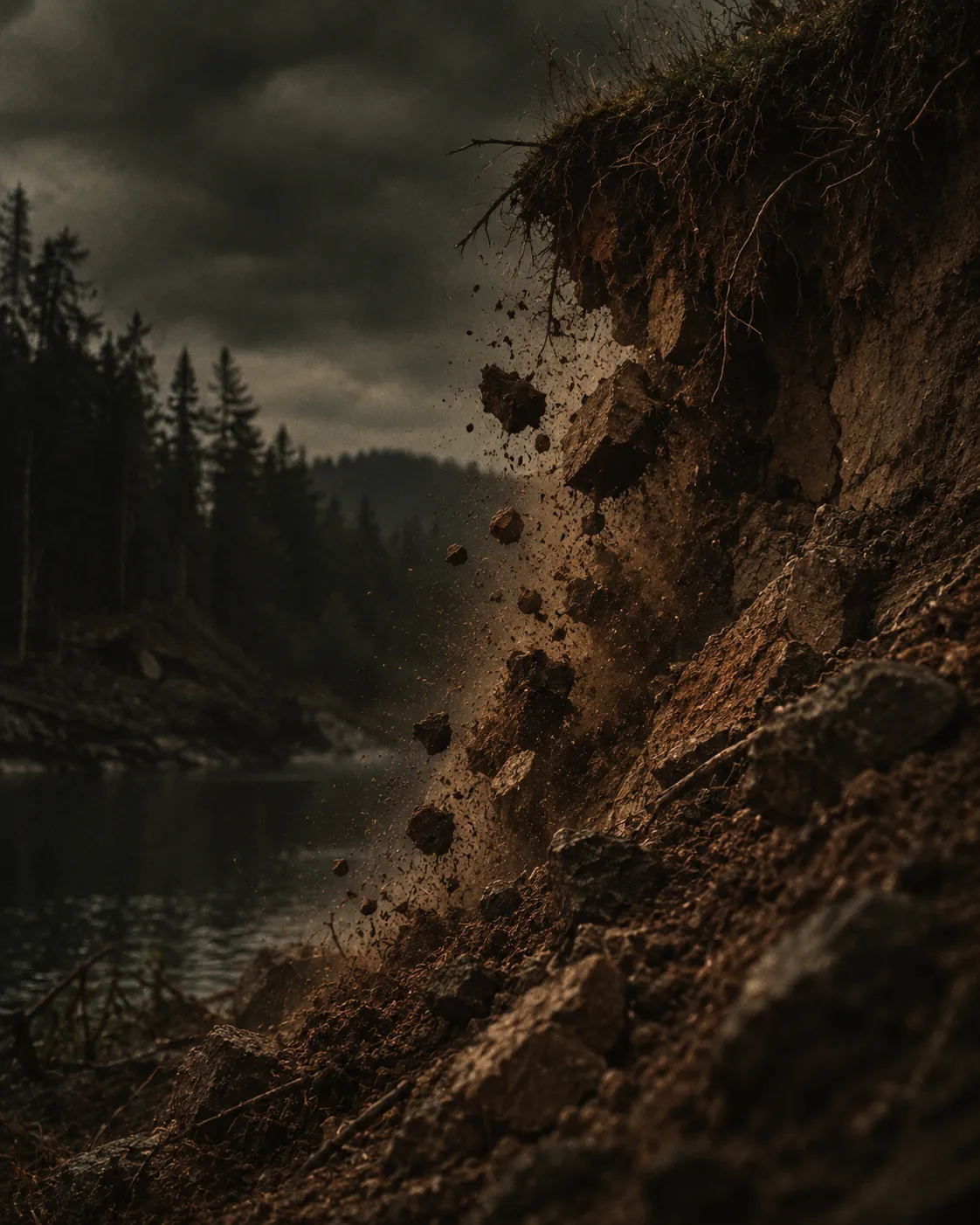
Fire advances, but it also flickers at the slightest breath and goes out when the wood runs out, the portrait usually given to the sanguine. Water takes the shape of the glass, but it also bursts dams and wears through stone. Air is light, and the gale knocks down houses. Earth is firm, and the hillside collapses.
Each element has enough properties to portray any temperament. So picking one of them and forgetting the rest discovers nothing about you: it only proves that the choice came before the observation.
The image gives back what the interpreter put into it
Whoever says the choleric is fire did not draw the choleric's anger out of fire. He already had an idea of the choleric, looked in fire for the property that matched and threw out the rest. The order of inquiry was turned upside down: the image began to supply what it was only meant to represent.
That is metaphor, not symbol: taking a quality from a thing and sticking it onto a person from the outside. A metaphor can be beautiful, but it has no power to say what a person is.
"It's only symbolic" destroys its own defense
When you ask for the foundation, the answer comes: "it's a symbolic language". Very well. But a language, on its own, is neither true nor false, and you cannot get from the rules of a language what it is going to say. If the table is only language, it states nothing about you.
Except that it states things all the time: how many temperaments there are, who you are and why you act the way you do. You cannot classify people as if it were science and then, when called to account, hide behind poetry.
Not even tradition accepts this use of the symbol
Whoever says "it's symbolic" thinks tradition is on his side. It is not. For Guénon, the true symbol is not born of a human convention: it rests on a real correspondence between different orders of reality. And he warned that "symbolism is an exact science, and not a reverie in which individual fancies can run loose".
In other words, the symbol does not accept just any reading. Using it without the correspondence that holds it up is not respecting tradition: it is turning it into a label, precisely the degradation tradition condemns.
The symbol respects the levels of reality
The heat of fire belongs to one level, and a person's anger belongs to another. A true symbol links different levels without confusing them: light can speak of truth without truth being made of light.
The Christian tradition read nature this way, as signs that reveal and at the same time conceal a higher reality. Saying "I am fire" does the opposite: it confuses the levels and identifies the person with the thing, as the cults that worshipped the stars used to do.
An analogy is not a cause
Even when two things truly resemble each other, the likeness shows a proportion, not a reason why. The haste of a flame and the haste of a man may look alike, but the flame is not the reason the man is in a hurry.
In the sentence "he explodes because he is fire", the analogy was promoted to a cause. And without a cause, the classification is left hanging in the air: what moves a person is inside him, in what weighs on him, what costs him and what draws him, and no element of nature answers for that.
"I'm fire, that's why I explode."
That sentence looks like self-knowledge, but it is an excuse. It takes a vice, disordered anger, and presents it as nature, as if the explosion came from the cosmos and not from a choice.
Reading your own conduct in the signs of nature is handing your moral conscience back to the ancient omens. Temperament is a natural capacity for virtue: the choleric's strength exists to face what is hard on someone's behalf, not to serve as an alibi when he yells at the people he loves.
In Axis Ratio, the image comes afterward
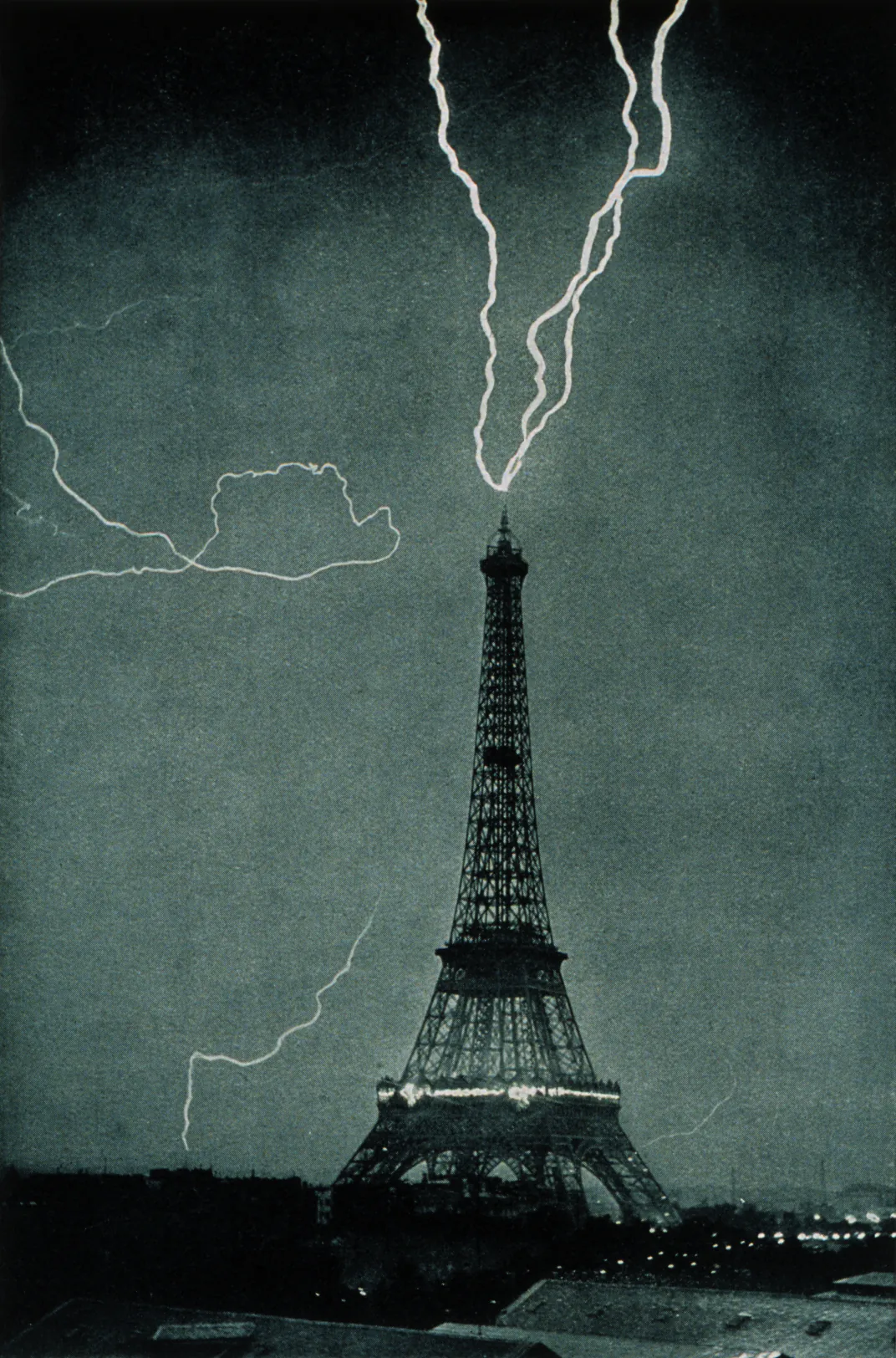
I use symbols too. The difference is in the order. First you describe the person: what weighs on him, what costs him, what draws him. Only then do you choose an image that expresses what has already been described, and no image classifies anyone.
That is why, in my method, the choleric is not fire. The symbol of the pure choleric is lightning: force that goes straight to the point. Fire, which spreads and warms whoever is nearby, expresses another species: the sanguine-choleric.
Temperament exists. The table is what died
A disposition does not disappear because it was poorly explained. There are those who face what is hard without waiting, those who live to be with others, those who preserve what has value and those who measure everything by what ought to be. That is in people, and that is what the study of temperament needs to explain.
I keep using the word "temperament" because it is the word that tells you what I am talking about. But what gives it meaning is not ancient physics: it is the concrete person, with the nature he received and the freedom to shape it.
A dead explanation explains no one
The ancient names have come down to us, and there is nothing wrong with using them. The problem is letting an abandoned physics keep telling you who you are, why you go wrong and what you cannot change.