
What was the temperament of Saint Carlo Acutis?
Today, on this young saint's feast day, let's find out through the life he lived.
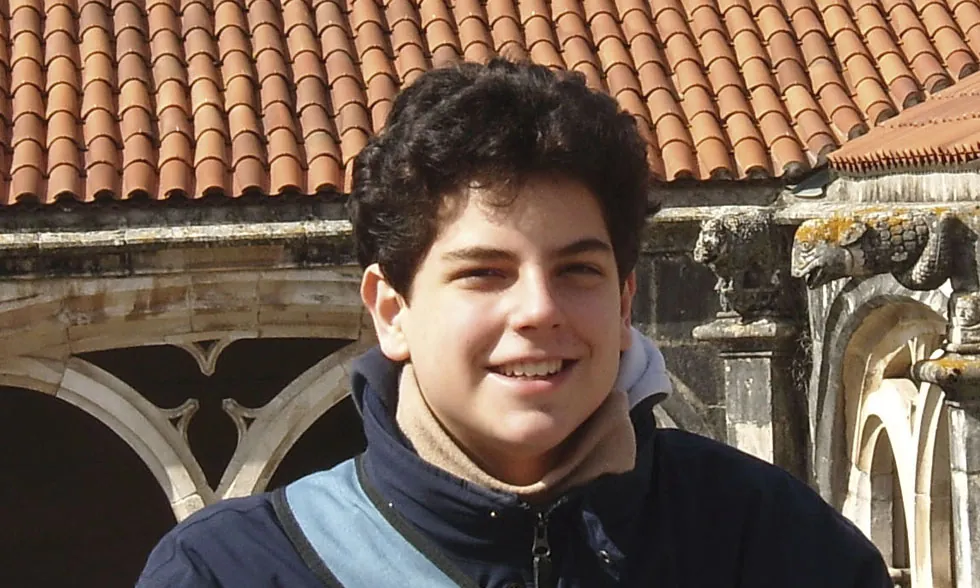
Before the saint, a boy


Carlo was born in London in 1991 and grew up in Milan. He was a boy who liked cartoons, video games, animals and friends, who made home movies and had a knack for computers.
Those who spent time with him found someone cheerful and approachable. His parish priest, however, makes an observation that interests us: there was liveliness in him, but a liveliness that wasn't constant restlessness.
It's in this real boy, before the fame and the altars, that we'll look for the temperament, because it's in ordinary life that it shows itself. And there are scenes, starting in childhood, that help a great deal to see it, and we'll follow them throughout his life.
He didn't return the provocation

His mother recounts that when Carlo was about four, a girl started bothering him with a ball, pulling his blanket and making faces. He didn't return any of it: he kept looking at her and smiling.
This ease in staying calm reappears in other accounts. But his mother adds something important: he knew what he wanted and, even then, he looked to Jesus as a reference for how to act.
In other words, from very early on, serenity and faith met in the same boy: nature gave the ease, and faith was already giving the direction. What remains is to see how that friendship began.
Jesus entered the conversations
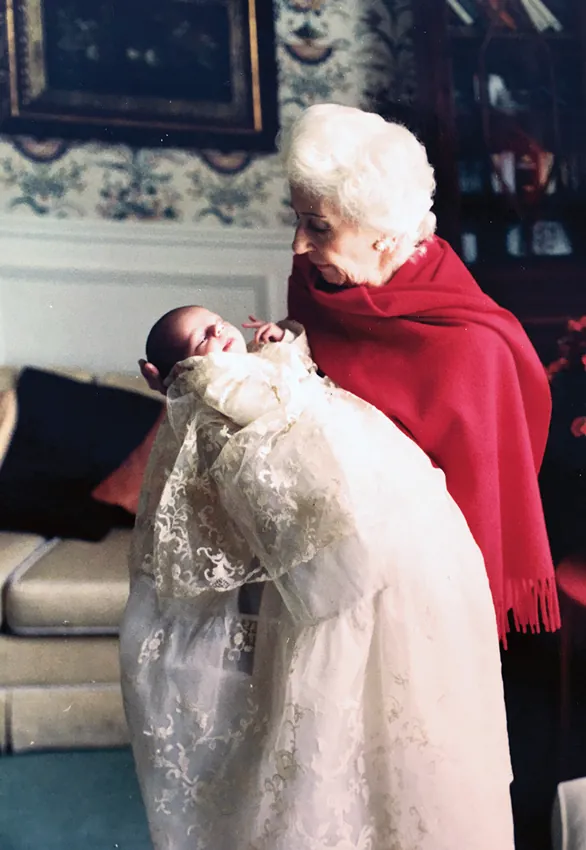
Beata, his Polish nanny, taught him to pray and talked with him about Jesus. Carlo asked questions, knew stories from the Bible and went into churches to visit Him.
His mother remembers that it was he who called her to go to the tabernacle. While still a child, he wanted her to draw closer to Jesus too, which shows that this faith wasn't kept just for himself.
In fact, the same affectionate way he had with people was beginning to make room for this friendship. And there was one encounter with Jesus that he awaited with a very special longing.
A joy too big for the pew

On June 16, 1998, at age seven, Carlo received his First Communion.
The religious sister who attended the celebration remembers that he was calm during the Mass. However, as Communion approached, his anticipation became visible, and after receiving he seemed unable to contain his joy.
Notice that the calm boy is still there, but now there is something moving him from within. From that encounter on, the Eucharist became the center of his life, with frequent Mass and adoration.
And this friendship wouldn't stay only inside the church: it would also show up at school, even at playtime.
When the class went off to play

A teacher recalls that there was a classmate who struggled with his studies and with getting along with others. Carlo helped him every day, and with so much patience that she sometimes encouraged him to go play with the others. He stayed by his friend's side.
Here we see serenity accompanied by an ease in welcoming and getting along with people, and in that, something of his temperament already appears. Charity, however, is more than that, because Carlo was giving someone who needed him the time he could have spent playing.
And this same patient boy had a side that made the whole family laugh.
He also did comedy
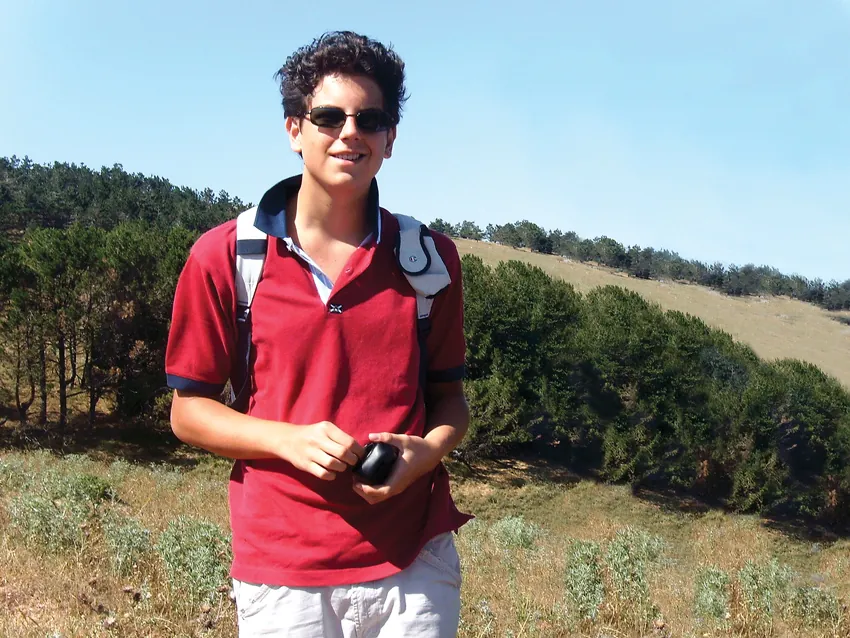
On a visit to a museum, his grandmother brought her little dog hidden in her purse, and the dog started making noise precisely during the guide's pauses. Carlo, his mother and his grandmother took turns coughing to cover it up. He filmed the whole thing, which became the home video "Panic at the Museum."
The scene matters because it undoes a caricature: the idea that a calm person is a dull person. In private, Carlo's joy came out freely, and a serene teenager can also joke around, chat and entertain others.
The camera was one of his tools, but the computer would open up even greater possibilities.
The computer found another purpose
Carlo studied computing out of his own interest and helped those who needed his know-how. Over time, he built websites for Church initiatives and worked on the exhibition on Eucharistic miracles, because what he loved to know, he wanted to make known.
See how his serene disposition didn't keep him from throwing himself into something when he found what mattered to him. And it was faith that gave this interest a concrete purpose: bringing other people closer to Jesus.
But it would be a mistake to confuse all this serenity with the attitude of someone who puts up with anything.
And there was a time to be outraged
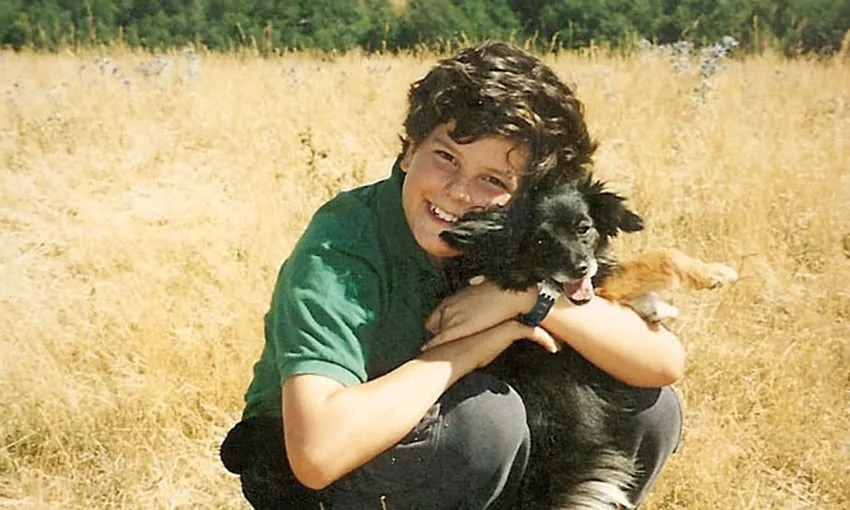
His mother recounts that some boys were mistreating a dog with a broom. Carlo was outraged, took the broom away and told them they shouldn't hurt animals for fun. He was also deeply upset when another boy killed a gecko as a joke.
These episodes show where his calm reached its limit: the suffering of a defenseless creature. So we are not dealing with someone incapable of getting angry, but with someone with little inclination to confrontation who, even so, acted firmly in the face of cruelty.
This is how temperament should be seen, without caricature. And this attentiveness also reached those suffering on the streets.
Those who slept on the street had names
Carlo brought food and hot drinks to the people who slept near his home, and used his own savings to buy sleeping bags.
And he didn't stop there: he also stayed to talk. The accounts preserve the memory of his kindness and of the interest he took in each person's problems.
The ease in approaching people, which is natural, gave way to concrete care, which is already a choice. In his mother's reading, Carlo sought to love Jesus in the poor as well.
And this consistency would prove decisive for someone who knew him up close, inside his own home.
The friend who asked for Baptism
Rajesh, who worked for the family, became Carlo's friend and took part in his home movies.
However, the friendship didn't stop at fun and games, because Carlo also talked with him about the faith and explained the Scriptures, the catechism and the sacraments to him. Rajesh testified that the boy's example and words contributed to his decision to receive Baptism.
In other words, Carlo's affable manner didn't keep him from speaking with conviction, because being pleasant is not the same as keeping quiet about what you believe.
But the one who helped others also recognized what needed to change in himself.
He knew what he had to overcome
Carlo once asked a religious sister to pray that he would become less lazy. His mother also tells of his struggle against gluttony, and that he sought help in prayer, in the example of the saints and in Confession.
What does this mean? That temperament is the disposition with which one lives, but virtue has to be cultivated. The calm that made getting along easy didn't exempt him from effort, and he knew it.
That's why Carlo acknowledged his own difficulties and tried to overcome them, which included setting limits even on a pastime he really enjoyed.
Fun couldn't take over everything
Carlo liked video games. According to his mother, however, he set himself a limit of just one hour a week.
The limit served to preserve his freedom: the freedom to fulfill his duties and to devote time to what he considered more important.
In this teenager's life, then, joy and self-denial could live side by side, because he was learning to enjoy things without handing pleasure the steering wheel of his life.
This everyday work, done in small things, would be carried into a situation no one in the family expected.
When the illness came
In October 2006, Carlo fell ill. The leukemia advanced rapidly, and he was hospitalized.
His mother relates that, still at the beginning of those days, he offered his sufferings for the Pope and for the Church. Once in the hospital, he asked to receive the Anointing of the Sick and Communion.
This shows that his friendship with Jesus, built in everyday life, wasn't something for calm days only, because it remained present when his life was under threat.
There was real suffering, and that has to be said. Even so, in the midst of it, Carlo still found room to think of someone else.
Even there, he thought of others

The device that helped him breathe caused him great discomfort, and his mother recounts that he tried to offer up that suffering too. When asked how he was, he replied that there were people suffering more than he was.
Carlo died on October 12, 2006, at fifteen. The serenity of those days goes beyond the limits of nature, because it is the effect of the grace of God, which presupposes nature but elevates it.
Now, having gone through this life from beginning to end, we can gather the traits that appear in it from childhood on.
So what was his temperament?
Through Axis Ratio, set against the facts of his life, my reading is that Saint Carlo Acutis was phlegmatic-sanguine: FleuSan.
That's because habitual calm, patience in dealing with others and little inclination to compete or retaliate appear, from early on, alongside joy, affection and an ease in approaching people.
Being playful at fifteen doesn't contradict this reading, and it was on this nature that his holiness was built.
Holiness happens on top of temperament: it makes use of the natural virtues and fights against the vices. Grace lifts us up, and love makes us go beyond the limits of our own nature.
Calm learned to serve
In the canonization homily, Leo XIV highlighted how Carlo brought together prayer, study, sports and charity, and recalled the Mass, adoration, Confession and love lived out in small concrete gestures.
In the light of this teaching, we see the beauty of this life: the boy of serene disposition didn't stand still in his own serenity, but learned to offer others his time, his talents and his care.
His holiness had a source and a direction, and both are summed up in Carlo's words that the Pope recalled: "Not I, but God."
Fifteen years. A whole life for God

Leo XIV presented Carlo as an invitation to make the most of life by directing it toward God, and recalled that all of us are called to holiness.
If you are phlegmatic-sanguine, you may recognize your own way in him, and also the warning he left: the calm you received by nature is not yet virtue, and it needs to learn to serve. If you have another temperament, rejoice in the gifts God made fruitful in this life.
Saint Carlo Acutis, pray for us.