
What was the temperament of Saint Catherine of Alexandria?
At 18, she went alone to argue with the emperor. He summoned fifty wise men to defeat her, and all fifty were converted.
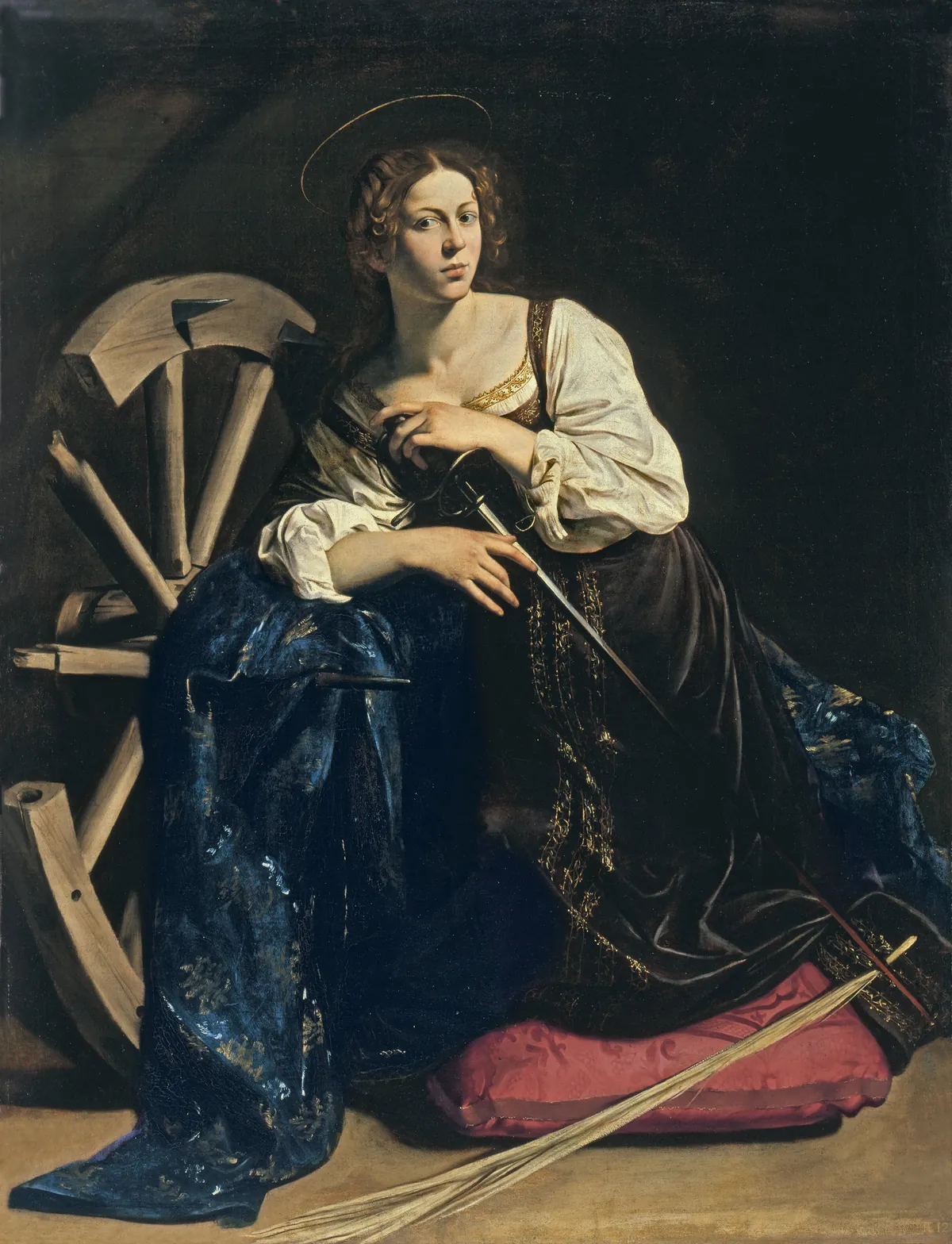
What we know of her comes from tradition
Saint Catherine lived in Alexandria, in Egypt, around the year 305, during the last great persecution of Christians. The documents of the time say almost nothing about her. Everything we know came through tradition: through the lives written in the East and through the Golden Legend, the most widely read collection of saints' lives in the Middle Ages.
The portrait these sources preserved, however, is consistent from beginning to end. The same young woman appears in every scene with the same intelligence, the same high standards and the same courage, and it was this portrait that the Church venerated for seventeen centuries.
The teachers became disciples
According to the Golden Legend, Catherine was the daughter of a pagan king named Costus. She started school at seven and soon outpaced everyone her age. Her father, proud of her, had a tower built for her in the palace, with study rooms, and placed at her service the seven wisest teachers he could find.
The Legend says that, a short time later, those who had come to teach began to learn from her and became her disciples. In Catherine's temperament, knowledge never sat still on the shelf: it went straight to whoever stood in front of her.
She described the bridegroom she would accept
Her father died when she was 14, and the court began pressing her to marry. An uncle listed the four gifts that, in his view, obliged her to choose a husband: the noblest blood in the world, the greatest inheritance, beauty and wisdom.
Catherine answered, the Legend says, that she would accept a bridegroom who had those four gifts beyond all measure: so noble that everyone honored him, so rich that he surpassed everyone in wealth, so beautiful that the angels rejoiced to look at him, and so pure that his mother was a virgin. The yardstick was hers, and it was higher than that of the whole court.
A hermit told her who that bridegroom was
Eastern tradition says that Catherine's mother was secretly a Christian and took her daughter to an old hermit who lived in a cave near the city. He heard the description of the bridegroom and said he knew such a man, unequaled in wisdom, in beauty and in nobility.
He then showed her an icon of Our Lady with the Child Jesus in her arms. Catherine spent the night gazing at that image. The one who accepted only what was beyond all measure finally had before her someone who was.
The Child turned His face away
That night, according to the same tradition, Catherine saw Our Lady with the Child in a dream. But the Child turned His face away and said He could not look at her, because she was ugly, poor and without faith as long as she did not give up her unbelief.
The young woman who was the most beautiful, the richest and the wisest in the city heard that none of it was enough. She did not argue with the dream: she went back to the hermit, asked to be instructed in the faith and was baptized. When the measure she found was greater than herself, Catherine did not lower it; she went after it.
The bridegroom's ring
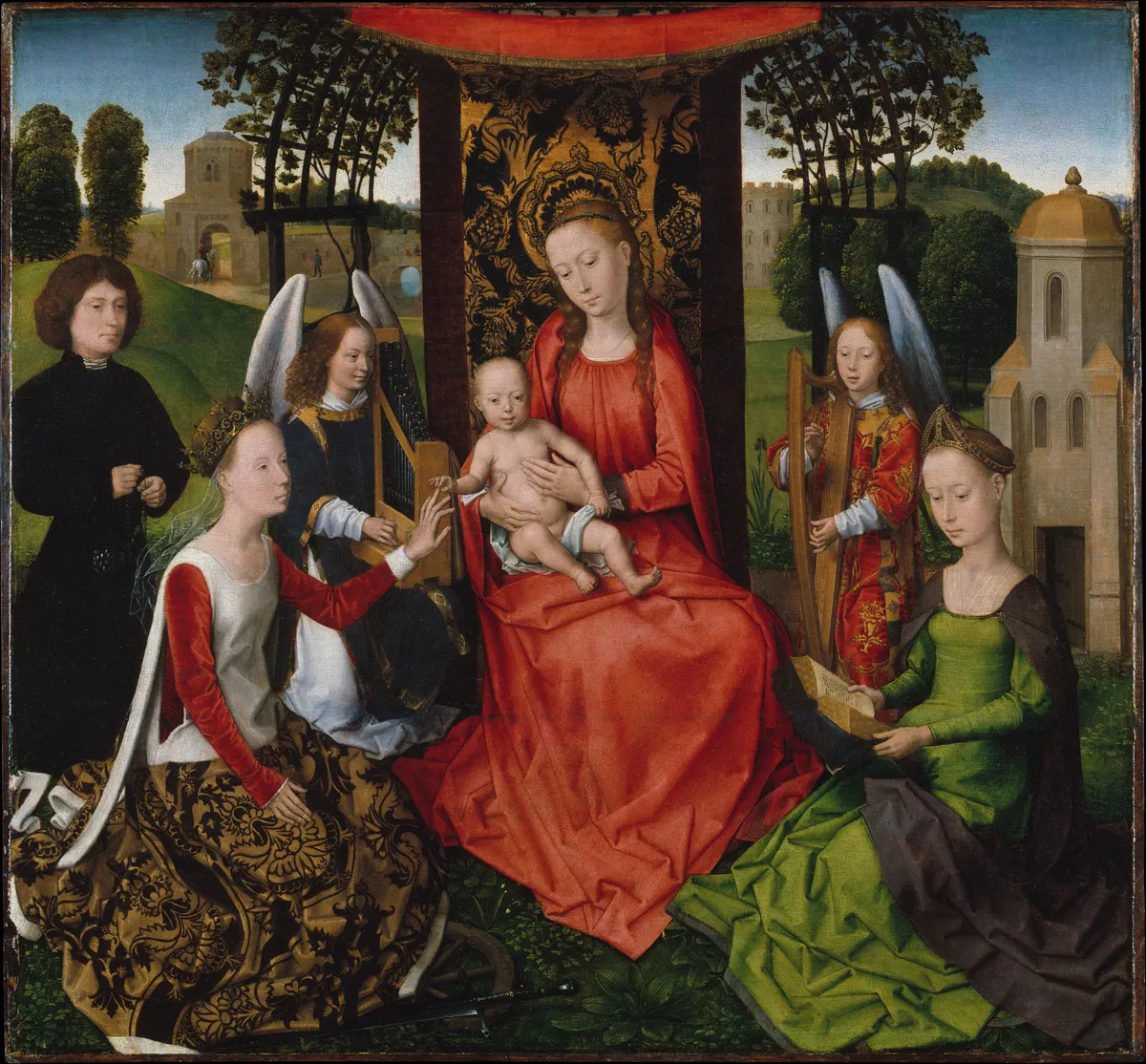
After her baptism, tradition says, Our Lady appeared again with the Child. This time He looked at Catherine with joy and placed a ring on her finger, as a sign that she was His bride. According to the Eastern life, the ring is still on the saint's hand today.
The scene became known as the mystical marriage of Saint Catherine and was painted by Correggio, Memling, Veronese and many others. At the monastery that bears her name, in Sinai, pilgrims still receive a ring as a keepsake. The bridegroom she had described to the court had appeared.
At 18, she went alone to the emperor
According to the Golden Legend, the emperor Maxentius came to Alexandria and ordered everyone to sacrifice to the idols, on pain of death for the Christians who refused. Catherine was 18 and lived alone in the palace. She heard the noise of the animals being led to sacrifice, sent to find out what it was, and saw Christians sacrificing out of fear.
She did not wait to be summoned. She made the sign of the cross, went to the emperor and said: "The dignity of your office and the path of reason have led me to greet you, if you acknowledge the Creator of heaven". In her temperament, seeing what was right being trampled was reason enough to step forward, even though no one had threatened her.
Fifty wise men against one young woman

The emperor could not answer her. So he summoned, from several provinces, the greatest grammarians and orators of the empire, promising great rewards to whoever defeated "a well-spoken girl". Fifty came.
Before them, according to the Legend, Catherine protested: "What kind of judgment is this, that sets fifty orators against one girl, promises them a reward for victory and forces me to argue with no hope of any reward at all?" Before defending herself, she pointed out what was crooked in the very rules of the game.
All fifty were converted
Catherine debated the wise men and, the Legend says, refuted their gods with clear reasons, until all of them fell silent. The leader of the orators told the emperor: "This girl, in whom the Spirit of God speaks, has converted us so completely that we can say nothing against Jesus Christ."
Enraged, the emperor had all fifty burned in the middle of the city. They were afraid of dying without baptism, and Catherine instructed them and assured them that the blood they shed would count as baptism. She did not leave the work half done: she made sure each one reached God the right way.
She refused to become a statue
Then the emperor tried the path of honor. According to the Legend, he promised Catherine the first place in the palace after the empress and a statue of her in the center of the city, to be worshiped by the people as a goddess.
She answered: "Stop saying these things, for it is evil even to think them. I have given myself to Jesus Christ; He is my bridegroom." The emperor had her scourged and locked for twelve days in a dark prison, without food or drink. The glory he was offering was exactly what she had already weighed and left behind.
In prison, she converted the empress
While the emperor was away, the empress, struck by what she was hearing, went to the prison at night with Porphyrius, the commander of the guard. The Legend says they found the cell filled with light and angels tending Catherine's wounds.
She spoke with them both until midnight. The empress was converted, and Porphyrius fell at her feet and embraced the faith along with two hundred soldiers. All of them died as martyrs shortly afterward. Imprisoned and hungry, Catherine kept doing what she had always done: she went to whoever was before her and led them to the truth.
The wheel broke
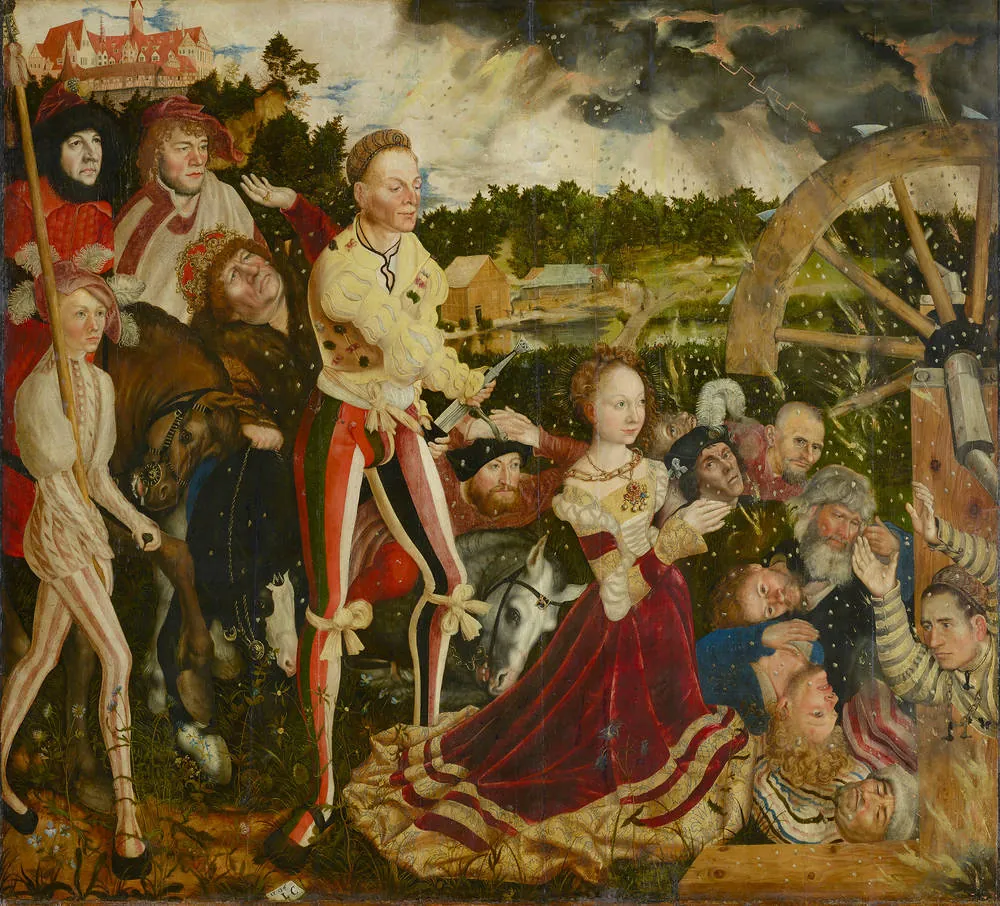
When the emperor returned, an adviser suggested a torture that would frighten the Christians: four iron wheels with sharp blades, two turning against the other two. According to the Legend, Catherine prayed that God would break the machine, and an angel shattered it with such force that it killed many of the pagans watching.
The wheel became her symbol in Christian art. To this day, when you see a crowned saint beside a broken wheel, it is Saint Catherine. The instrument meant to defeat her became the sign that she was not defeated.
"I am ready to suffer everything."
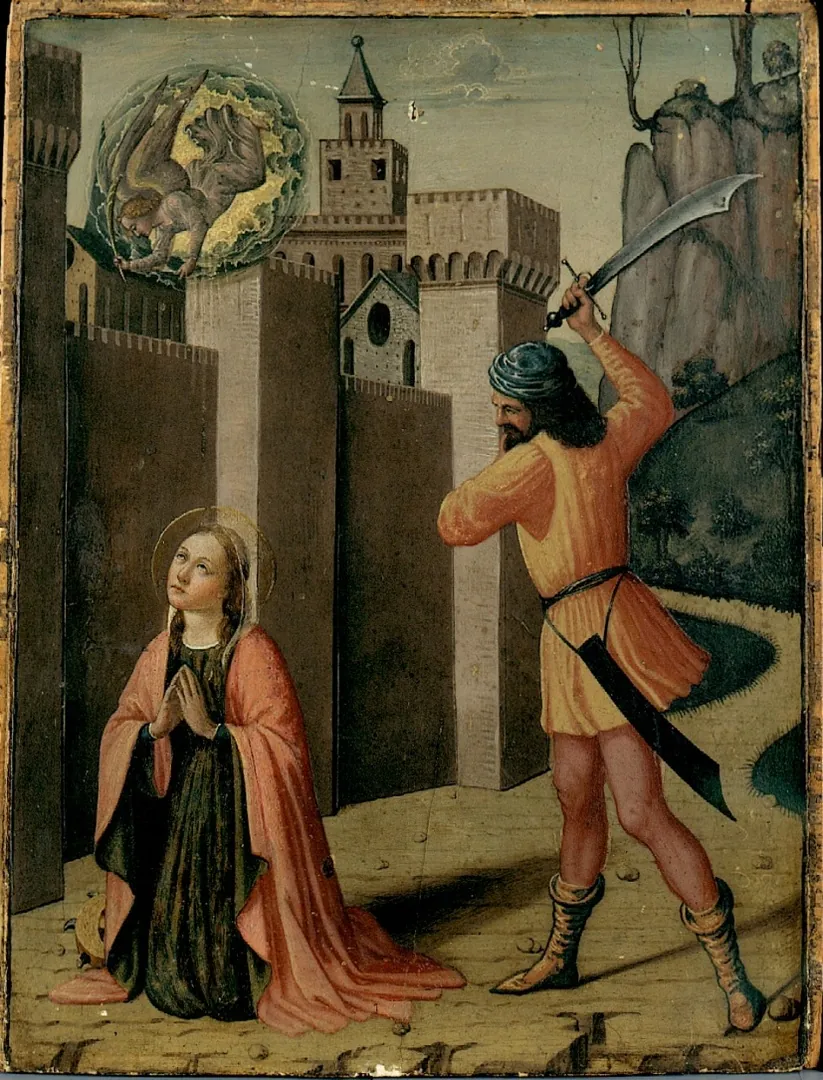
The emperor made his last offer: if she sacrificed to the gods, she would be first in the palace; if not, she would lose her head. Her answer, according to the Legend, was short: "Do everything you have in mind. I am ready to suffer everything."
She was beheaded outside the city. Tradition says that milk instead of blood flowed from her body, and that angels carried her body to Mount Sinai. The young woman who had gone to the emperor without being summoned went to the end the same way: without waiting for anyone to force her.
The Sinai monastery bears her name

In the 6th century, according to the monastery's tradition, Catherine's head and left hand were found and taken to the church of the monastery that the emperor Justinian had just built in Sinai. The monastery came to bear her name and is among the oldest in the world still inhabited by monks.
In the Middle Ages, Catherine became one of the most beloved saints in Europe. Saint Joan of Arc said at her trial that she heard her voice. In 2000, Saint John Paul II made a pilgrimage to Saint Catherine's Monastery, at the foot of the mountain where Moses received the Law.
Removed from the Calendar in 1969. Restored in 2002
In the 1969 reform, the feast of Saint Catherine was removed from the General Roman Calendar for lack of historical data about her life. She did not stop being a saint, and the people did not stop praying to her. In 2002, in the new Roman Missal, Saint John Paul II restored the memorial of November 25 to the whole Church.
She is the patron saint of philosophers, students and teachers. In Brazil, she is the patron of the state of Santa Catarina and of the Archdiocese of Florianópolis, and the Santa Catarina Court of Justice keeps a relic of hers in a chapel. The saint of the intellect never left the house of those who think.
Choleric-melancholic
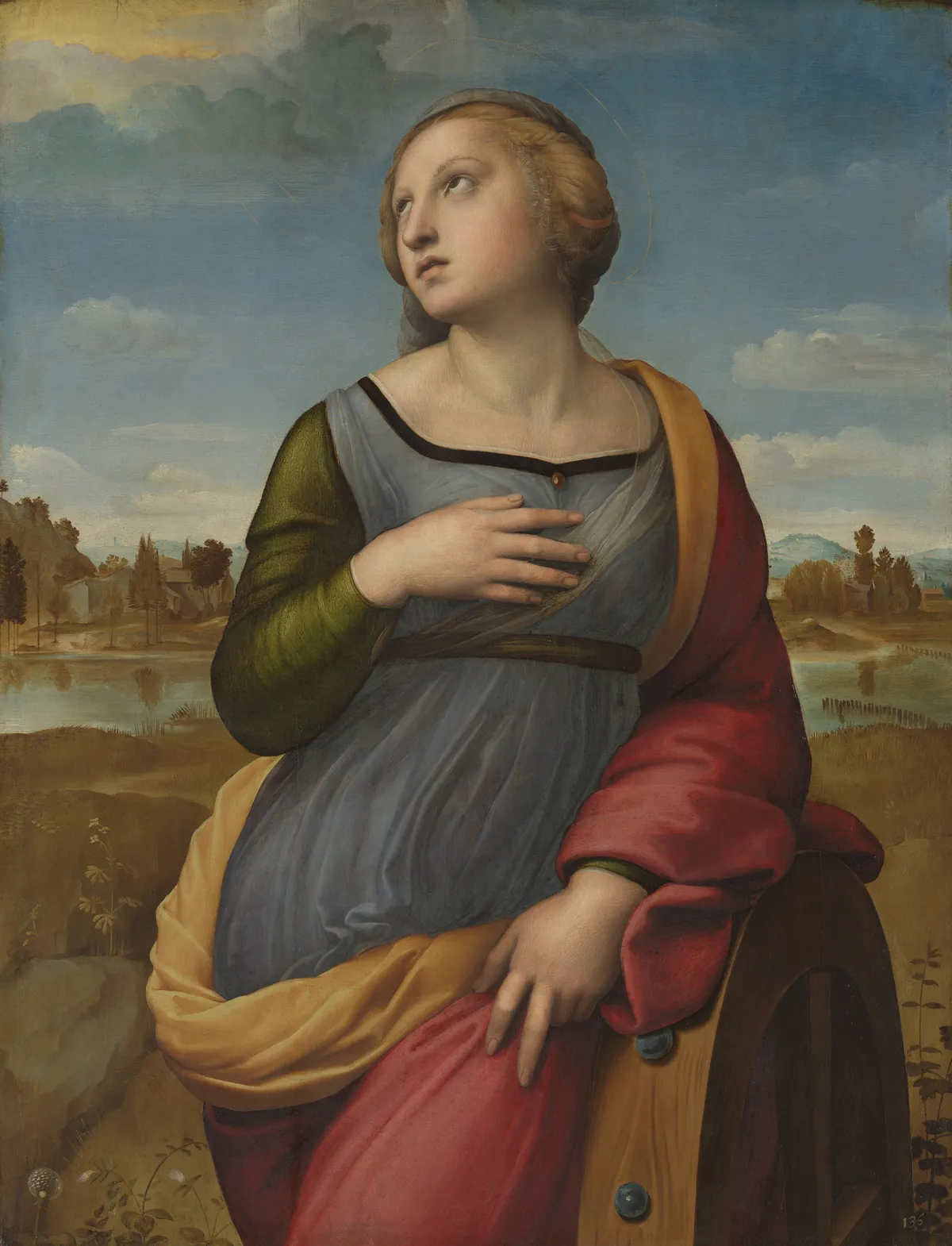
According to Axis Ratio, Saint Catherine of Alexandria was choleric-melancholic.
The choleric force rules: faced with what is hard, she goes, and she goes without being called. The melancholic measure serves that force, because defeating the emperor and the wise men was not enough: the truth had to be defended with clear reasons, the rules had to be fair and each convert had to reach God the right way.
The symbol of the choleric-melancholic is the closed circuit: the energy runs at full force, but within a precise path that comes back to each point until it is right.
The marks of the choleric genus
Every choleric has a natural inclination toward the arduous, and in Saint Catherine it shows up like this:
- Initiative: at 18, she went alone to the emperor without anyone summoning her.
- Courage: she agreed to debate fifty wise men chosen to defeat her.
- Firmness: she refused the statue of a goddess and answered the death threat: "I am ready to suffer everything."
- Leadership: while imprisoned, she converted the empress, the commander of the guard and two hundred soldiers.
The choleric, then, does not wait for the problem to come to him, and that is how an 18-year-old girl stood before the most powerful man in Egypt.
The marks of the choleric-melancholic
In the choleric-melancholic, force comes with a standard: winning is not enough, everything has to be right. In Saint Catherine:
- High standards: she would only accept a bridegroom whose nobility, wealth, beauty and wisdom were beyond all measure.
- Sense of justice: before the debate, she denounced the rule that gave a prize to the fifty and nothing to her.
- Precise argument: she defeated the wise men with clear reasons, until none of them could answer.
- Care to the very end: she assured the condemned philosophers that their blood would count as baptism.
That is why, for her, victory was only complete when the truth had been served in full, and that is why the Church gave her as patron to those who think.
The saint who laid her intellect at the feet of Christ
Saint Catherine did not have to stop being intelligent, demanding and courageous to become a saint. Nature gave her the force and the measure, and grace showed her the only bridegroom who measured up to them. Today, November 25, is her memorial. Saint Catherine of Alexandria, pray for us.