
What was Patrick Stewart's temperament?
He scolded the Star Trek cast for laughing too much and, even when applauded, thought he hadn't done a good job. He died on Wednesday, October 28, at 86. What kind of disposition is that?

"We are not here to have fun."

First season of Star Trek: The Next Generation. Between scenes, the cast joked around, and Captain Picard didn't find it funny.
When actress Denise Crosby said that every now and then you had to have some fun, Patrick Stewart answered: "We are not here, Denise, to have fun."
The cast burst out laughing. He stormed off and slammed his dressing-room door. "I didn't like being laughed at."
Decades later, he wrote in his memoir: "I could be a hard and severe fellow."
"It was my fault."

Patrick Stewart was born on July 13, 1940, in Mirfield, in the north of England. The family was so poor that, when the debt collector knocked, mother and son hid behind the sofa. The boy thought it was a game.
When his father came back from the war, he started beating his mother. On one of those nights, she was on the floor, bleeding. The policeman arrived, as if that would help, and said: "Mrs. Stewart, it takes two to make a fight."
The boy heard it and kept it. "For a long time, I thought it was my fault," Stewart said.
"It's a play, not a novel."
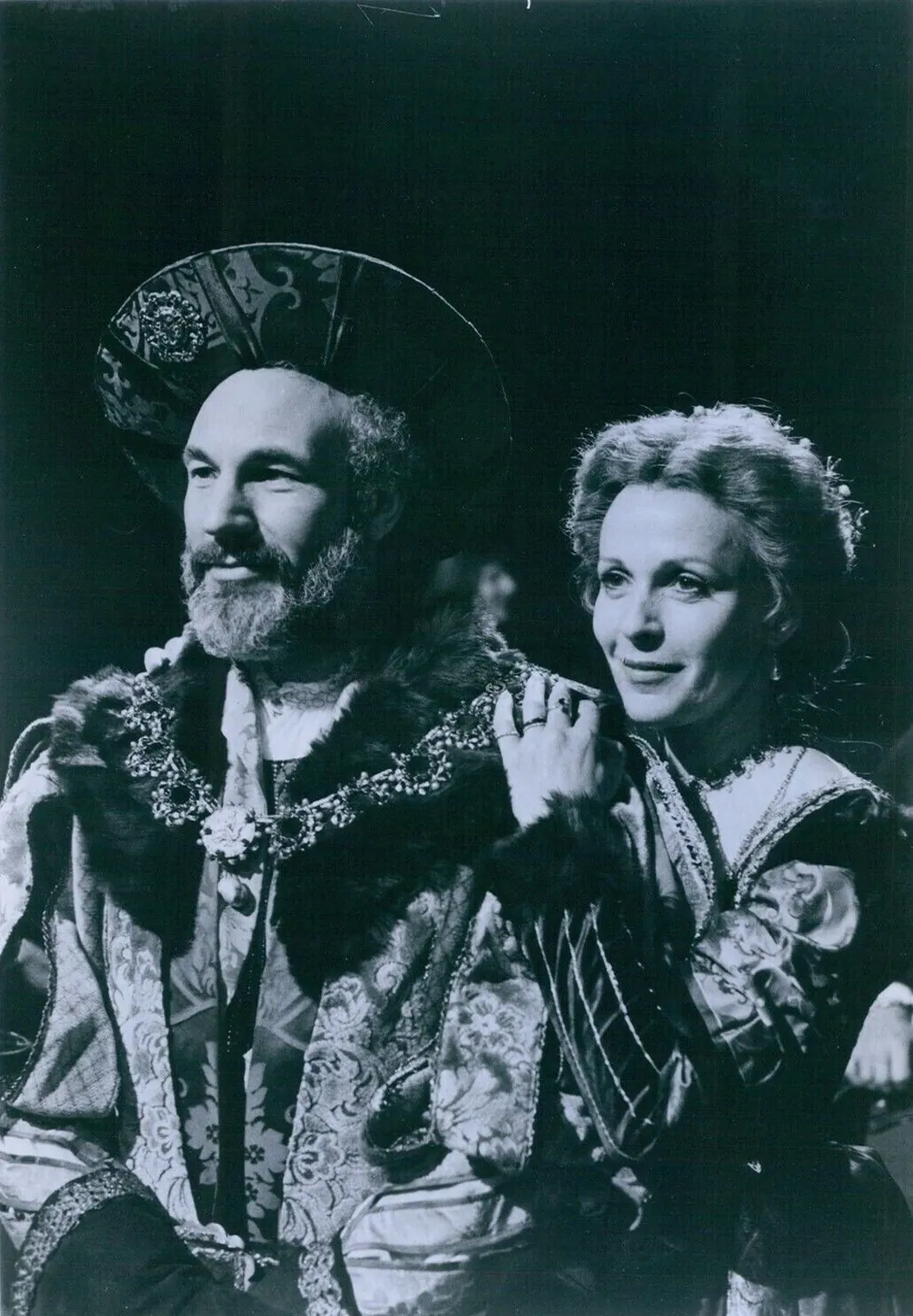
At 12, his teacher Cecil Dormand handed out copies of The Merchant of Venice to the class. The students began reading silently, and he slapped his hand on the desk: "No, out loud. It's a play, not a novel."
"Patrick, you are Shylock." He had hoped to be left out, because he didn't read well aloud. "In my mouth the words had no meaning, because in my head they were incomprehensible."
And yet: "I felt I was entering a new world. And I liked it."
"I'll go right now, Mr. Wilson."
At 15, he left school and went to work at a local newspaper. At night, he rehearsed with an amateur theater company.
When the town council meeting clashed with rehearsal, he skipped the meeting and made up the story. Until, one of those nights, the town caught fire, and the reporter wasn't there.
The editor gave him an ultimatum: "If you can't give up the theater, you'll have to leave."
"I'll go right now, Mr. Wilson." He spent the following year selling furniture. "I chose acting, not journalism."
"Who's going to pay for that?"

When his son wanted to study acting, the father was blunt: "Who's going to pay for that? We don't have the money, Patrick."
The county paid: a public grant took Stewart, in 1957, to the Bristol Old Vic Theatre School. "My mother was dazzled."
Two years of training followed, and then the repertory companies, role after role, town after town.
In 1966, he joined the Royal Shakespeare Company, the home of Shakespeare in England.
"For a thousand men to hear."

For his audition with the Royal Shakespeare Company, Stewart came prepared with Henry V's speech before the battle of Agincourt.
Director John Barton asked: "Imagine you are speaking to just one person, not to a crowd." Then he asked him to say it again, this time "for a thousand men to hear."
He could have defended the version he had rehearsed. He did the opposite. "I liked the challenge." And he said it had been thrilling.
"The audience loved it."

The man of "we are not here to have fun" spent years doing comedy. In 1968, he was Touchstone, the court jester in As You Like It, at the company's theater in Stratford.
In Much Ado About Nothing, he and Ben Kingsley made up jokes onstage, unrehearsed, in front of the audience. "They worked very well. The audience loved them, and Ben and I loved doing them."
The play's leading actor complained, and the director had to ask the two of them to tone it down.
"Something funny every day."

In 1987, at 47 and after two decades of Shakespeare, Stewart became Captain Jean-Luc Picard.
He started out bringing the rigor of the English company into the studio, and that's when the scolding came. But the cast wouldn't leave him alone.
Halfway through the second season, he called another meeting: "Each of us has to bring in something funny every day."
The same man who had banned fun now made it mandatory. Stewart gave his colleagues the credit for having softened him.
"As serious as Ibsen."

In 2003, in the second X-Men, Stewart was already Professor Xavier to millions of people. He was asked whether a comic-book movie deserved the same commitment as the theater.
The answer: "It is as important and serious a work as Strindberg or Ibsen. You don't do the job halfway because it's a studio's comic-book franchise."
And he said he knew of nothing more pleasant than talented people trying, together, "to make something good."
"That's not good enough."

Stewart said that, to his surprise, people were enthusiastic about his work "when often I thought it wasn't very good, and I wasn't satisfied with myself."
Onstage, there was a voice that wouldn't let go of him: "Oh, Patrick, that's not good enough. That's not good enough."
The applause didn't end the demand. And he himself recognized the price: "It gets in the way of spontaneity."
"I'm braver than I was at 35."

Offstage, the firm-voiced captain was another man. "I have always been a rather shy person."
Over time, though, the voice that said "not good enough" lost its strength. In 2020, at 79, he said:
"I'm braver than I was at 35. I don't run from risk and I don't judge myself." And he added: "I used to do that a lot."
The demand was still there, but he had learned to let the scene breathe.
"I always put my work before my family."
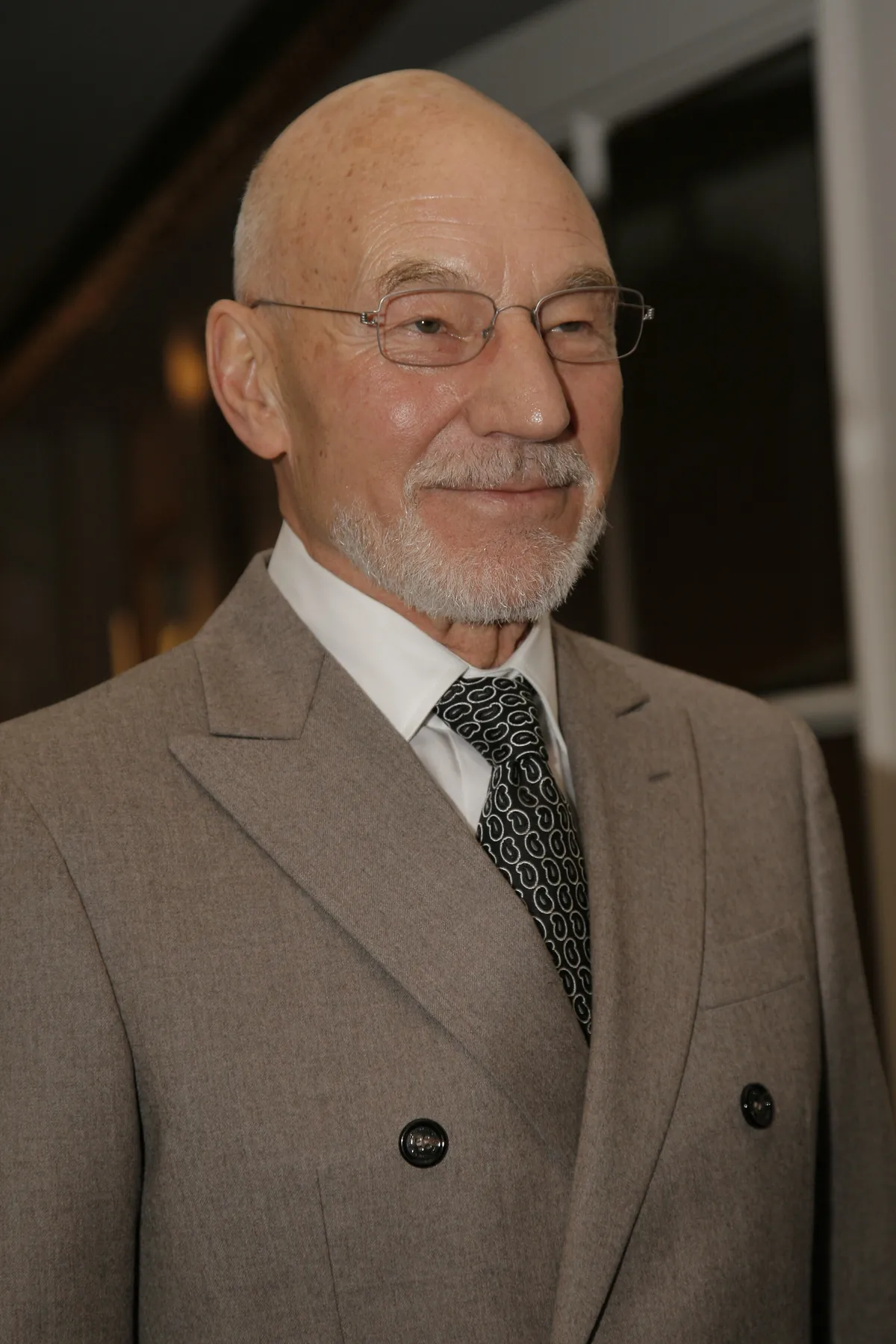
Stewart had two children from his first marriage. In 2023, at 83, he spoke about them without embellishment.
"I always put my work as an actor first, before my family." He said his relationship with his children was practically nonexistent.
"Not a day goes by that I don't suffer over the memory of my children, of who they were." And he admitted his share in what they became.
The man who wouldn't allow himself to play a role badly acknowledged he had failed where it mattered most.
"In my mother's name."

In the late 1970s, in London, the first shelter for battered women in the United Kingdom opened its doors. Stewart and his wife at the time brought cans of food, clothes and sheets. "They had nothing. But they had a lock on the door."
"I saw my father hit my mother." For her, he could do nothing; so he began to act "in her name."
Years later, he publicly supported Refuge and established, at the university in his home region, a research fellowship on domestic violence.
"We spend a good part of the time laughing."

Stewart's best friend was Ian McKellen, Magneto in the X-Men movies. Together, they did Waiting for Godot in London and on Broadway.
"In Yorkshire, people tend to be blunt, and Patrick really is blunt. But underneath that, his nature is very sweet." And he added: "We spend a good part of the time laughing."
This week, McKellen said goodbye: "He didn't hide what he felt, and that made him a man to trust, to admire and, in my case, to love."
A sonnet a day

In March 2020, with the world locked down at home, Stewart began reading one Shakespeare sonnet a day on social media. "A sonnet a day keeps the doctor away."
In 2023, at 83, he published his memoir, Making It So, and in it he told of the scolding, the house in Mirfield and the distance from his children.
Patrick Stewart died on Wednesday, October 28, 2026, at home, in Los Angeles, at 86.
Choleric-melancholic

According to Axis Ratio, Patrick Stewart's temperament was choleric-melancholic.
What drove him was taking on the work and carrying it through to the end: leaving the newspaper, taking charge of the cast, carrying a role on his back. The melancholic measure came to qualify that doing: it wasn't enough to do, it had to be done well. That's why the applause didn't end the demand, and that's why comic books deserved the commitment of Ibsen.
In the choleric-melancholic, strength does, and measure won't let it be done just any old way.
The marks of the choleric genus

Every choleric has a natural inclination toward the difficult, and in Stewart it shows up like this:
- Initiative: taking the lead to start or change something. He was the one who called the cast together to impose a rule.
- Confrontation: facing the difficult instead of avoiding it. At 15, he traded his newspaper salary for the uncertainty of the stage.
- Spirit in the face of challenge: the difficult, instead of frightening, makes one want to go at it. He didn't read well aloud and, even so, he liked being Shylock.
- Pursuit of results: wanting the effort to get somewhere. He spent years going from role to role until he joined the Shakespeare company.
The choleric, then, doesn't sit waiting for things to happen, because the difficult is precisely what sets him in motion.
The marks of the choleric-melancholic

In the choleric-melancholic, that strength comes with a yardstick: it isn't enough to do, it has to be done well. In Stewart:
- High standards: delivering work well done, not just finishing it. To him, a comic-book movie deserved the same commitment as Ibsen.
- Precision: attending to the detail that changes the result. At the audition, he said the same Henry V speech to one man and then to a thousand.
- Self-criticism: seeing the distance between what he did and what he could have done. Even applauded, he heard inside: "That's not good enough."
- Correction: going back to what he did to get it right. He corrected even his own scolding, and the cast began bringing something funny every day.
That's why he matures when he understands that doing well doesn't mean controlling everything: not the scene, not his colleagues, not himself.
The actor was greater than the captain
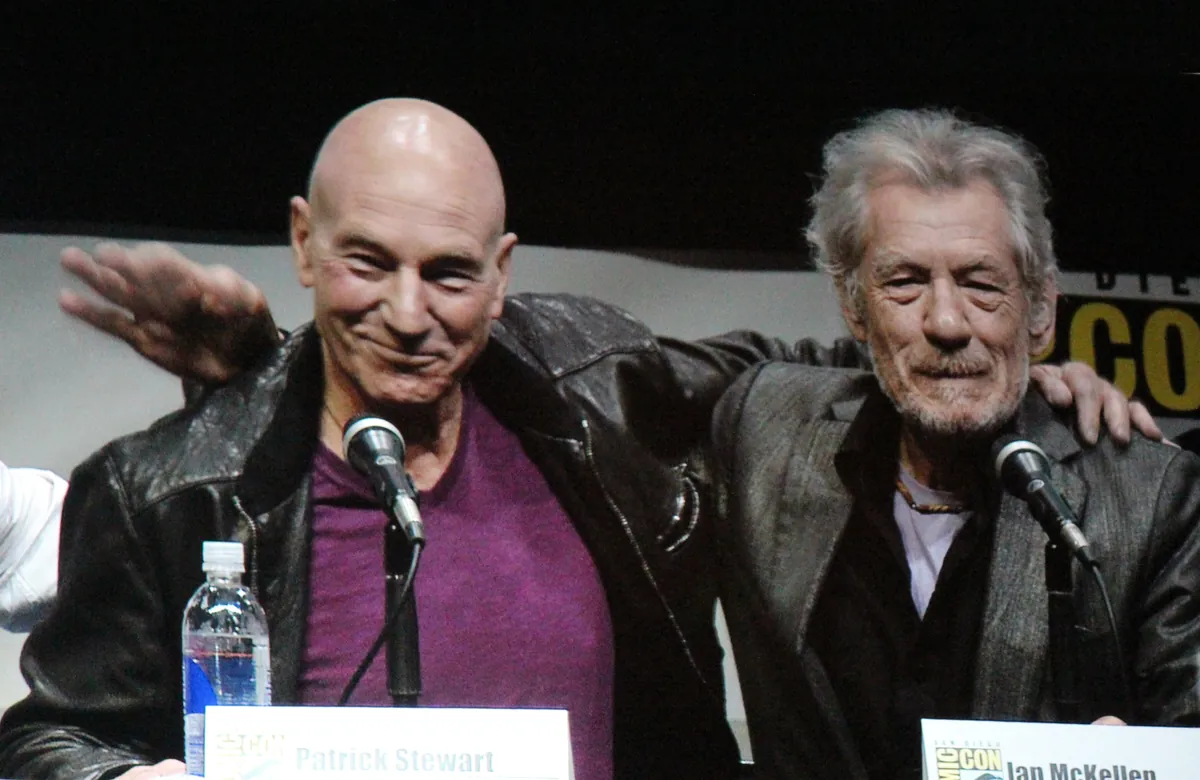
Patrick Stewart is that strength that refuses to do things just any old way. He is the boy who hid from the debt collector, read Shylock out loud, traded the newspaper for the stage, scolded the cast, learned to laugh with them and, at 79, read a sonnet a day for those locked down at home.