
What is Neymar's temperament?
The boy who was too ashamed to ask for food at his friend's house became the all-time top scorer for Brazil's national team.

The whole family slept in one room
Neymar da Silva Santos Júnior was born in Mogi das Cruzes, in São Paulo state, in 1992, the son of a soccer player. At 6, he moved with his family to São Vicente, on the São Paulo coast. "The whole family lived in one room, at my grandma's house," he told Trip magazine. "It wasn't the poorest. It was humble."
It was also at 6 that coach Betinho saw him running around the stands at a beach soccer game and decided to train him. "I spent six years looking after him," he told AFP. "Now he belongs to the world."
"No, I just took it cold."
At his friend Raphael's house, Neymar loved Raphael's mother's cooking, but he wouldn't ask for it. "Sometimes he was hungry and didn't say anything, he was that ashamed," Raphael told the news site UOL. The boy would only let slip: "Oh, auntie, I miss that brigadeirão" (a big Brazilian chocolate dessert).
One day the electric shower burned out, and he showered in cold water without telling anyone. "You didn't tell anyone?" "No, I just took it cold." In his temperament, what bothered him stayed inside: it was easier to go hungry or cold than to ask.
Losing wasn't acceptable, not even at odds and evens

In a footvolley match, Neymar lost to his friend Joclécio, who ran off singing Ayrton Senna's victory theme, the tune Brazilian TV played every time Senna won. "He went crazy. He started crying, wanted to fight, that's how competitive he was," his friend Luís recalled to UOL.
At video games, after losing and getting teased, "he left my house slamming the doors," Raphael said. "Then he came back and apologized." In his temperament, defeat didn't pass right away: it weighed on him, burst out all at once, and when his head cooled, he came back to make it right.
"My heart told me to go back."
At 14, Neymar spent three months on trial at Real Madrid. He hung out with Robinho, watched Ronaldo and Roberto Carlos train, and talked with the Brazilians on the squad. Even so, he went back to Santos.
"I don't know... my heart told me to go back to Santos and I went back," he told Trip four years later. "Weren't you happy there?" "No." In his temperament, the size of the club wasn't enough: what weighed more was being where he recognized as his own, with family and friends close by.
"Practically my brother."
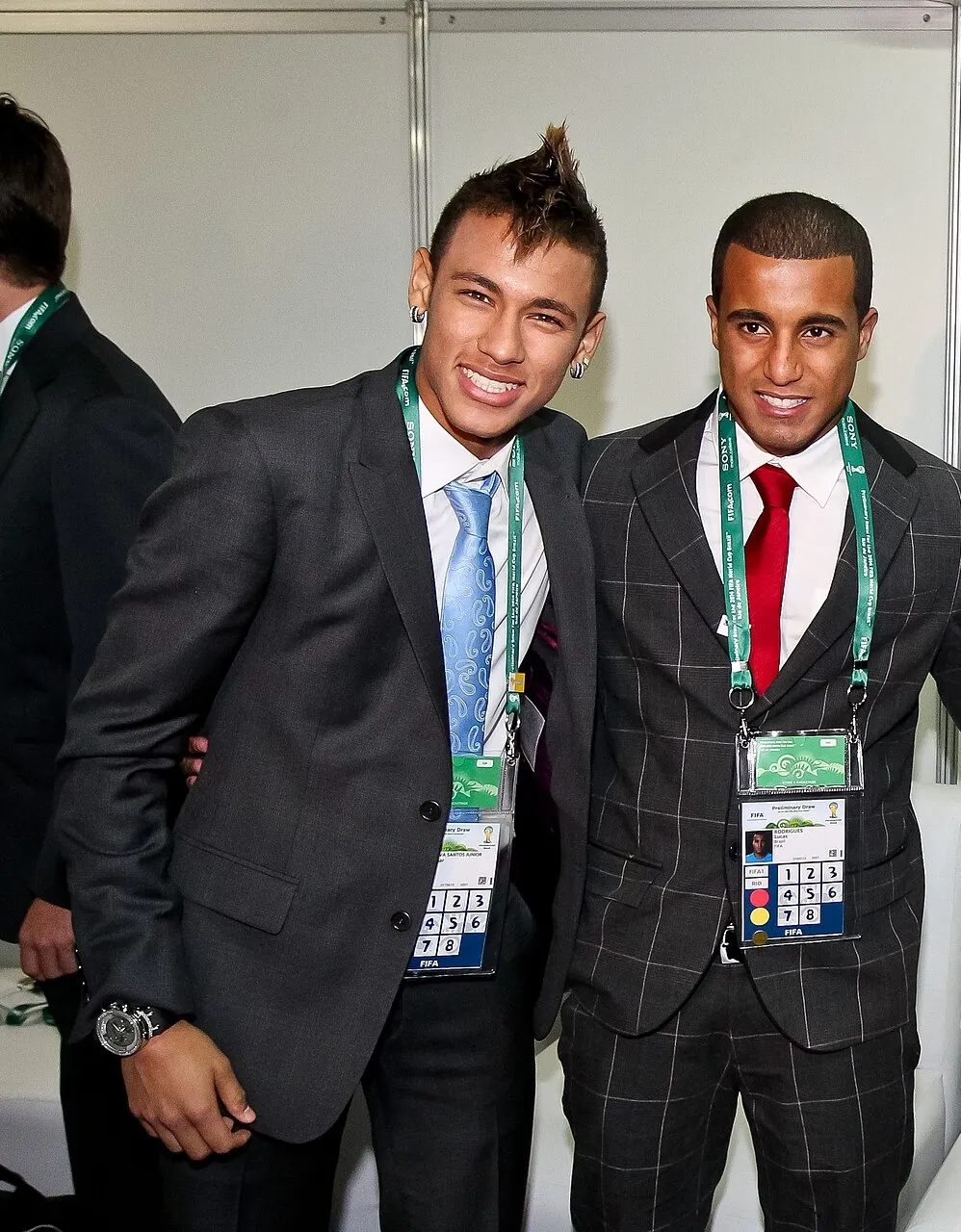
Joclécio was in Santos's youth academy, came from Pernambuco, in northeastern Brazil, and slept in the club dorm, with no family nearby. "I ended up bringing him to live at my house," Neymar told Trip in 2010. When he introduced his friend to the reporter, he accepted the word "buddy" only to correct it: "Right, he's practically my brother, Jo." They had already been living together for three or four years.
In 2020, UOL still counted him among Neymar's inseparable friends. In his temperament, whoever earns his trust isn't just passing through: they become family and are defended as family.
The penalty he believed was his
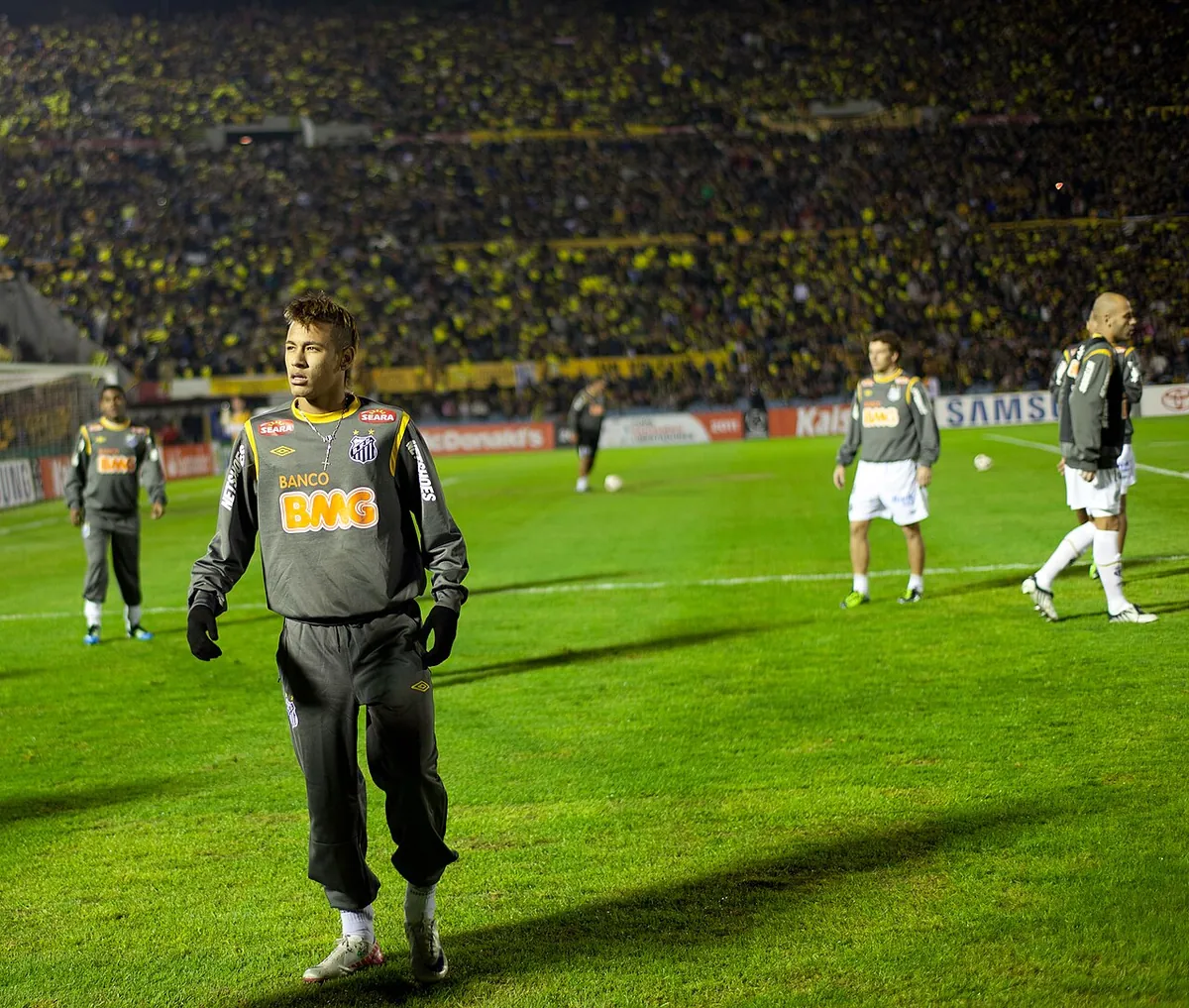
In September 2010, at 18, Neymar drew a penalty against Atlético-GO and got ready to take it. Coach Dorival Júnior told Marcel to take it instead. Neymar protested, argued with the coach and the captain, and was fined.
The next day, he apologized: "The real Neymar isn't the Neymar from yesterday. The real Neymar is the joyful one, with a smile on his face. I got home and saw what I did. I even upset my parents. I was crushed." In his temperament, what he believed was his by right weighed more than the score, and at home, the judgment turned against himself.
"That weight stays on your conscience."
Six days after the incident, Dorival was fired. A month later, on the TV show Fantástico, Neymar was still talking about him: "I didn't feel guilty, but I was very sad. That weight stays on your conscience, yes. He was practically my father for eight months. I really liked Dorival."
The story had already left the news, but it hadn't left him. In his temperament, a serious disappointment doesn't end with an apology: it keeps being turned over inside, long after everyone else has moved on.
He cried at halftime

In 2013, at 21, Neymar arrived at Barcelona and couldn't play the way he knew he could. "There was one day I felt total despair, I went into halftime of the game against Athletic Bilbao really angry, I started crying," he told Romário.
"Then Messi knocks on the door and asks why I'm crying." Messi said he was there to help and that Neymar should play the way he played at Santos, without pressure. In his temperament, no outside criticism hurt as much as the gap between the soccer he knew he had and what he was showing.
"Two centimeters further in."

In the quarterfinals of the 2014 World Cup, a knee from Colombia's Zúñiga fractured a vertebra in Neymar's back. He left on a stretcher and was out of the tournament. In his first interview, he cried: "If it had been two centimeters further in, I could be in a wheelchair."
Three years later, in a conversation with Piqué for The Players' Tribune, he still called it the worst moment of his life: "I just cried at home, I saw my mom, my dad crying, everyone sad." In his temperament, the pain of a great loss doesn't stay in that day: it lasts, and is remembered with the same weight years later.
"I didn't want to see anyone else."

After Brazil was knocked out of the 2018 World Cup, Neymar withdrew. "I didn't want to see a ball in front of me, I didn't want to see soccer," he told AFP. "I had my moments of mourning, of sadness, of being by myself. I didn't want to see anyone else."
And he added: "But sadness can't last forever, because I have my son, my family, my friends, who don't like to see me sad." In his temperament, frustration calls for withdrawal and time, and what pulls him back is the people he trusts.
"I keep things to myself."

In 2019, at 27, Neymar explained to the British newspaper the Daily Mirror what was behind the outbursts everyone saw on the field: "I'm a very reserved guy, I keep things to myself. But it gets to a point where I end up getting frustrated, getting nervous, exploding and not communicating the right way."
"I'm trying to get better at that. Whenever I have a certain conversation with someone, I try to speak up." In his temperament, discomfort doesn't come out right away: it stays, builds up, and when it comes out, it comes out all at once. It's the same boy who would rather take a cold shower than ask for help.
"It will hurt for a long time."

At the 2022 World Cup, Neymar scored the goal against Croatia that tied him with Pelé as Brazil's all-time top scorer. Shortly after, Croatia equalized, and Brazil went out on penalties.
The next day, he wrote: "I'm psychologically destroyed, this was without a doubt the defeat that hurt me the most, it left me paralyzed for 10 minutes and right after I broke down crying nonstop. It will hurt for a long time, unfortunately." In his temperament, a loss like that isn't a page to be turned: he knows, ahead of time, that he will carry it.
"One penalty won't change what I think of you."
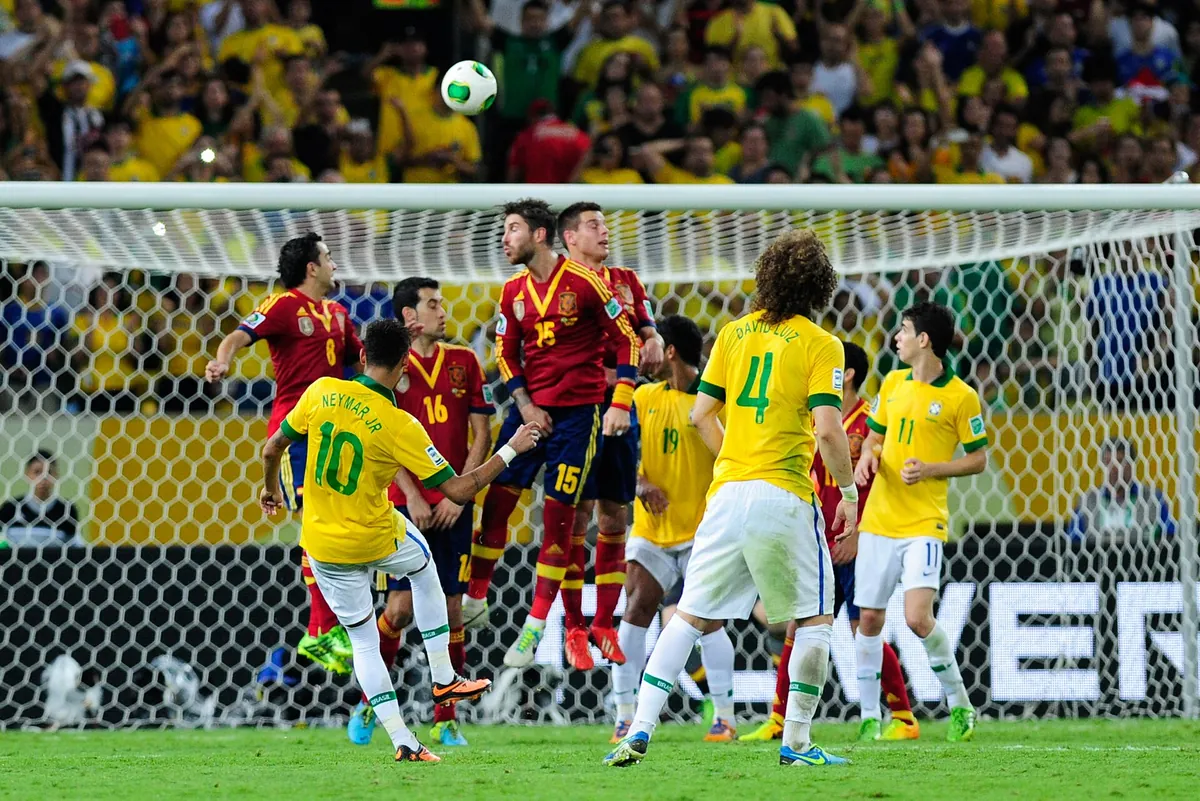
Destroyed as he was, Neymar still wrote to the two teammates who missed penalties against Croatia. To Marquinhos: "Stopping by to say I'm your fan. One penalty won't change what I think of you." To Rodrygo: "Only those who take penalties miss them. I've missed many in my career and learned from all of them."
Later, he shared the messages "so people could see how much we wanted it and how united we were." In his temperament, his judgment about who is on his side is firm, and it doesn't change because of one mistake.
He passed Pelé
On September 8, 2023, in Belém, in northern Brazil, Neymar scored twice against Bolivia and reached 79 goals for Brazil, two more than Pelé, according to FIFA's count. "I always wanted to write my name in the history of Brazilian soccer and of the Brazilian national team, and today I did it."
In the same remarks, he made a point of measuring his own feat: "Passing Pelé doesn't mean I'm better than him or any other player on the national team." In his temperament, achievement carries enormous weight, but it comes with a precise assessment of what it means.
"You are my fortress."

In October 2023, Neymar tore a knee ligament and went 369 days without playing. In January 2025, he returned to Santos: "I didn't come here to take it easy, to sit at home on the couch. I came here to play soccer."
Months later, he cried in an interview with friends and family in the audience: "You are my fortress. When I do this on the field, with you close by, I feel stronger, more secure." In his temperament, the strength to start over comes from the place and the people he recognizes as his own.
Melancholic-choleric
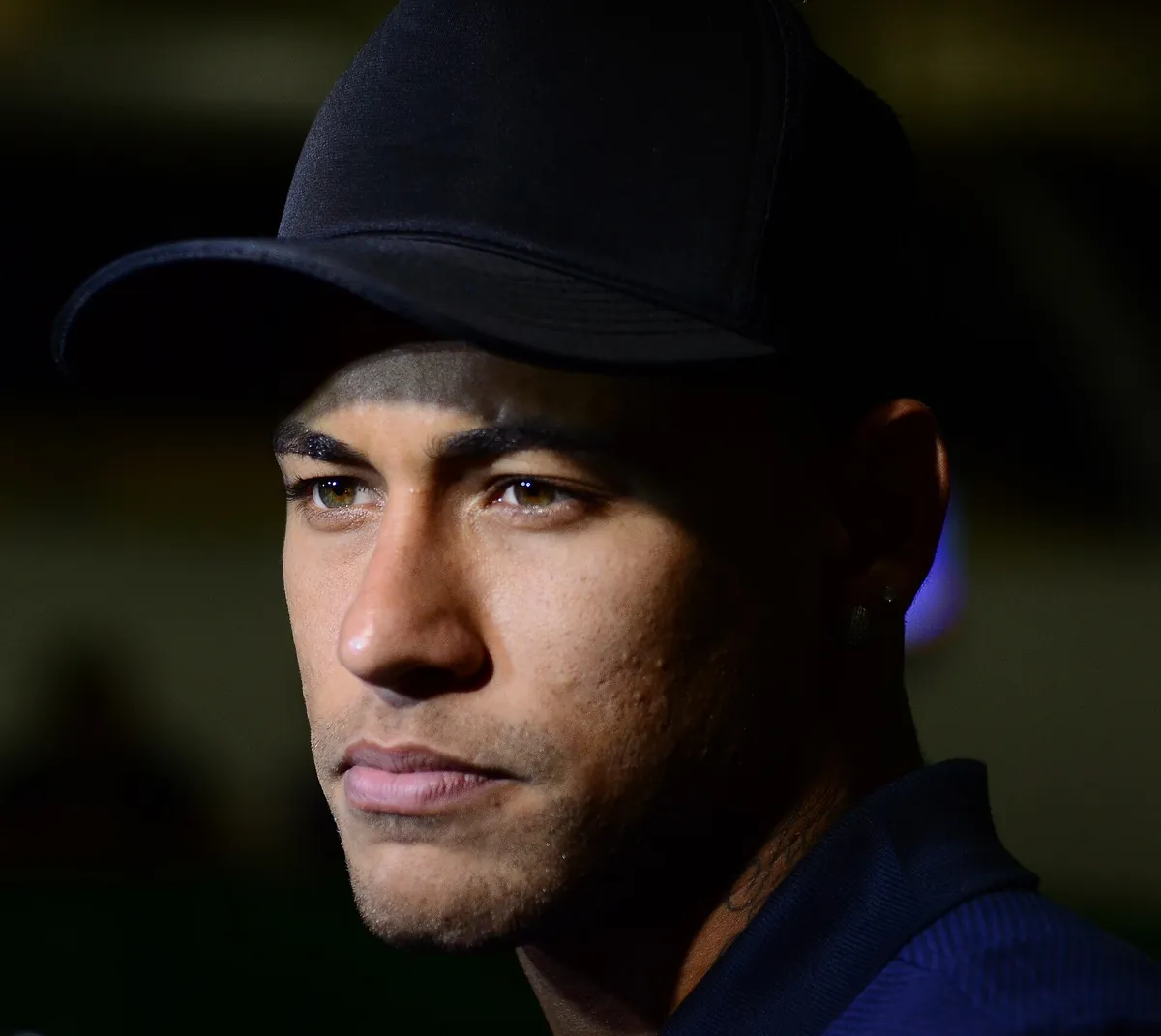
According to Axis Ratio, Neymar is melancholic-choleric.
The smile is real, but it isn't what rules him. What rules him is measure: he knows what is his, who his people are, and where he fell short. What doesn't measure up stays inside, weighs on him, and one day comes out all at once. The choleric force comes to serve that judgment: the gap between what is and what should be becomes a goal, from the tears at halftime in Barcelona to Pelé's record.
The symbol of the melancholic-choleric is magnetite, a polarized crystal that has direction and draws to itself what it has recognized.
The marks of the melancholic genus

Every melancholic has a natural inclination toward measure, and in Neymar it shows up like this:
- Reserve: "I'm a very reserved guy, I keep things to myself," he told the Daily Mirror.
- Discomfort left unspoken: he went hungry and took cold showers at his friend's house rather than ask.
- Frustration that lingers: three years later, he still called the 2014 injury the worst moment of his life.
- Deep bonds: he brought his friend Joclécio to live at his house and called him his brother.
The marks of the melancholic-choleric
In the melancholic-choleric, measure doesn't stand still: it gains the force to fulfill itself. In Neymar:
- Personal justice: he fought for the penalty he believed was his, against the coach and the captain.
- Determination in achievement: "I want to be the best player in the world. Simple as that."
- Satisfaction in achievement: "I always wanted to write my name in history," he said on passing Pelé.
- Firm loyalty: crushed by the elimination, he wrote to those who missed their penalties that nothing had changed.
"I started here, I finished here."
In 2026, at 34, Neymar played in his fourth World Cup. In the round of 16, against Norway, in the same stadium where he debuted for Brazil, he scored Brazil's goal from the penalty spot in a 2-1 loss, his 80th for the national team. "I tried, I tried. Now it's over. I started here, I finished here." Last week, when a friend suggested a comeback, he replied: "Dreaming costs nothing."
Neymar, do you recognize yourself in this portrait?