
What Is Eduardo Bolsonaro's Temperament?
Jair Bolsonaro's "03" traded the beach for the Federal Police, the Federal Police for politics, and ended up bringing the world's largest conservative conference to Brazil. At every step, he brought people along. What kind of disposition is that?
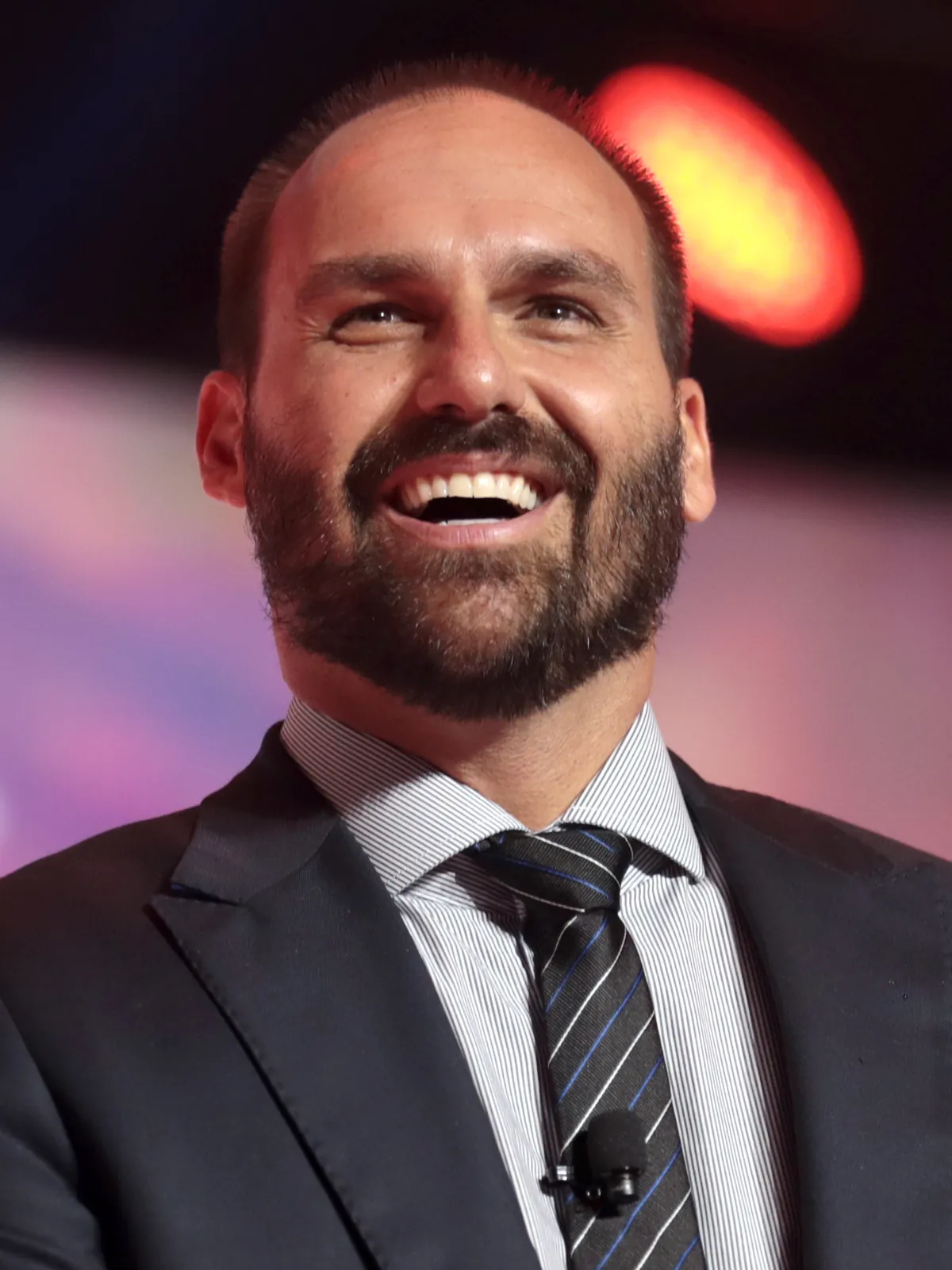
Everyone had their own job at the campsite
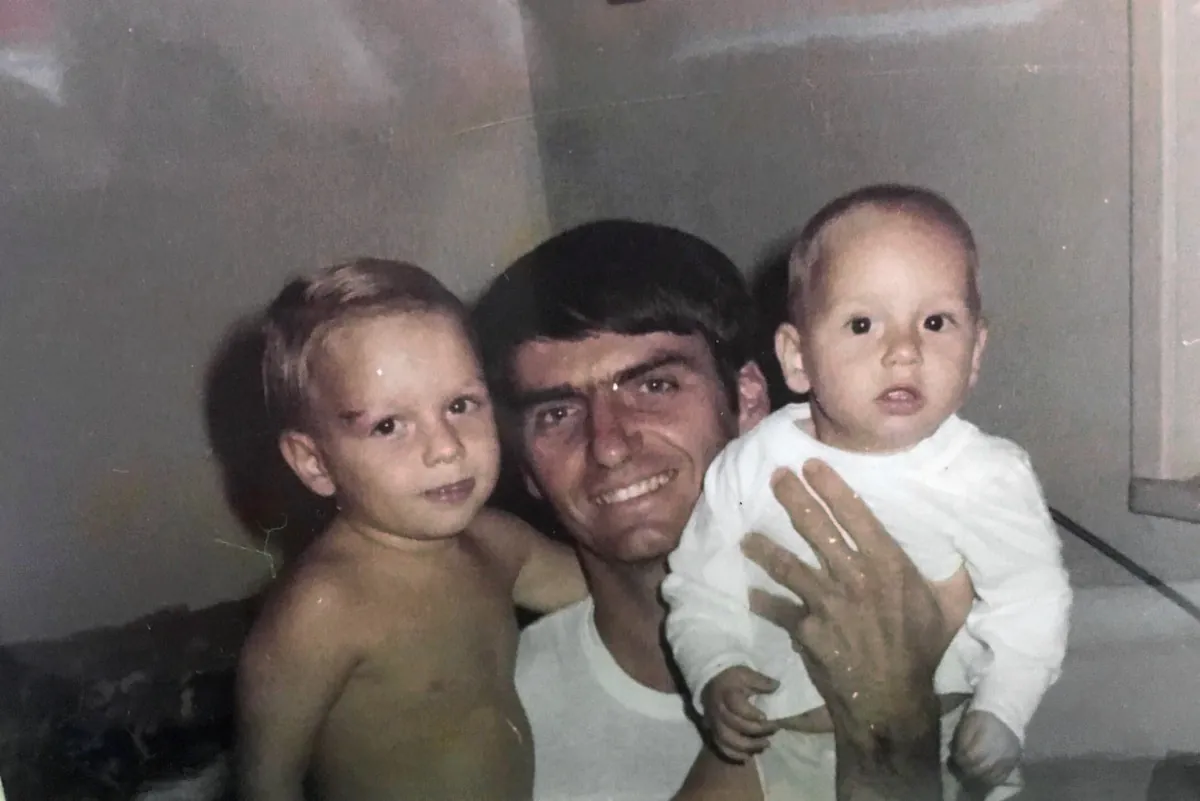
Looking at old photos, Eduardo remembers the fishing trips and campouts with his father and brothers. The one handing out the jobs was Jair: one helped set up camp, another cleaned the fish. At home, Rogéria took the boys to soccer and swimming, and even swam along with them.
In other words, he grew up in a house where nobody watched from the sidelines, and that way of working, as a group and with each person's job clearly defined, will reappear in almost everything he did afterward.
He started surfing at 12

Eduardo says he caught his first wave at 12, on vacation in Mambucaba, on the Rio coast. Then came the trips to the beach with his school friends, and the board never left his life again.
His studies changed, his work changed, even the country he lives in changed, but surfing stayed, and almost always with someone beside him, which shows that in him the love of the wave has always come mixed with the love of company.
He kept his modeling album

As a teenager, Eduardo put together a photo album to try to work as a model. Years later, already a congressman, he took the album out of the drawer to show a reporter from piauí.
Heloísa, his wife, teased him about the photos, and he laughed along and kept showing how he used to pose back then. Many people would hide that album from a journalist; he opened it on the table, because he isn't afraid of being seen and doesn't take his own image so seriously that he can't laugh at it.
He forgot to register for the college entrance exam

After a year of preparation, Eduardo passed the first stage of UERJ's entrance exam and missed the registration deadline for the second. Instead of spending days stewing over the mistake, he called a friend and went surfing.
Soon after, he got into law school at UFRJ, the other university he had applied to. The fall was real, and not a small one, but it had no time to turn into lament, because he deals with frustration the same way he deals with almost everything: on the move and in company.
In college, he was the one who gave rides

At UFRJ, Eduardo played soccer, took part in the Law School Games and, since he had a car, gave his classmates rides.
According to classmates interviewed by piauí, part of the group stayed close after graduation and kept in touch with him for several years. That says more than it seems, because gathering people around a ball or a car is easy while college lasts; the hard part is keeping those people close once it's over.
He flipped burgers in the United States

Early in law school, Eduardo went to the United States on a work exchange program. He made burgers in Maine and shared a house with Brazilians and Peruvians.
In 2006, he studied law in Coimbra, Portugal, and what he remembers most are the trips he managed to take on cheap tickets: the flight could be bad, as long as it got him somewhere new. It's the portrait of someone who adapts quickly to whatever he finds and doesn't let an opportunity pass without getting everything out of it that it can give.
He argued for a rule that would apply to everyone

In his 2008 thesis, Eduardo compared court decisions and studied plea bargaining in Brazil and the United States.
One of his concerns was that a defendant's fate could depend on which court the lawyer happened to appeal to. That's why he argued for a common benchmark, so the decision wouldn't be left to each judge's taste. His concern, then, wasn't with justice in theory, but with the outcome that reaches the defendant, that is, with a rule that works in practice.
He traded the beach for the books

After graduating, Eduardo left behind his routine of beach days and nights out in Rio and went to study in his father's apartment in Brasília. The preparation paid off: he passed the civil service exam for Federal Police clerk, and his first posting was in Guajará-Mirim, in Rondônia, on the border with Bolivia.
For someone who had the sea as part of his routine, it was no small trade, and for that very reason it shows his other side: when he sees a goal, he is willing to give up what he enjoys until he gets there.
On the border, he shared a house with his colleagues

In Guajará-Mirim, Eduardo rented a house with other police officers who had also just arrived. He stayed less than six months on the border: when the chance for a transfer came up, he went to Guarulhos and then to São Paulo, the state where, years later, he would run in his first election.
Both attitudes come from the same place, because he didn't wait to put down roots before forming a group, nor did he wait for the opportunity to come around again before seizing it.
His mother asked if he really wanted it


Jair supported his son's entry into politics. Rogéria, on the other hand, remembers asking him whether he really wanted that path, after seeing everything his father and brothers were going through.
According to her, Eduardo insisted that he wanted to run, and in 2014 he was elected federal congressman for São Paulo. His mother's question was sensible, but it had no way of convincing him, because the difficulty she pointed to as a reason to give up was exactly what drew him in.
He called Olavo "Professor"

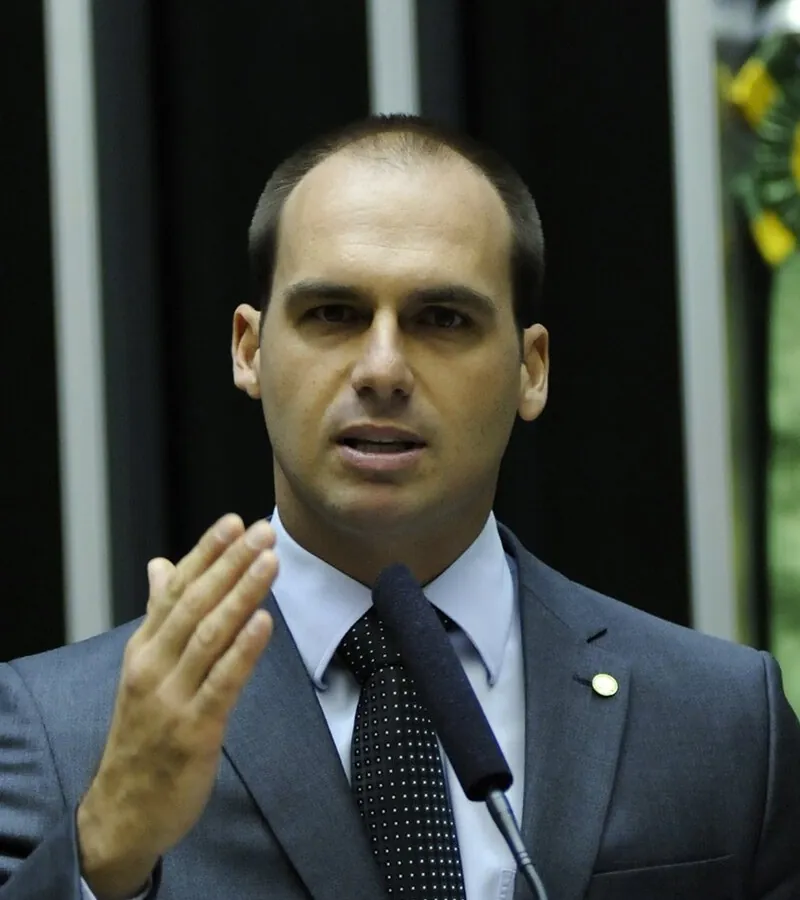
Eduardo was a student of Olavo de Carvalho. According to the Washington Post, he was among the students who traveled to Virginia, in the United States, to take classes at the philosopher's home, and on social media he called him the greatest living Brazilian philosopher.
When Olavo died, in 2022, he asked God to welcome "the Professor." A year later, he wrote: "If Brazilians woke up to the dark aims of the left, the professor is one of those most responsible." What he learned, he didn't keep to himself, because he asked his followers to watch Olavo's videos and made a point of saying whom he had learned from.
His record lasted eight years

In 2018, Eduardo got 1,843,735 votes in São Paulo, according to the TSE (Brazil's Superior Electoral Court): more than twenty times the 82,224 of his first election, four years earlier.
No federal congressman had ever received so many votes, and the record only fell in 2026, when Nikolas Ferreira and Lucas Pavanato passed three million. Eduardo wasn't in that race: in 2025, facing persecution by Alexandre de Moraes, in his campaign to jail every leading figure of the right or make them ineligible, he decided to stay in the United States to fight for Brazil from there. Had he been here, it's hard to imagine the record belonging to anyone else.
He proposed to his fiancée in front of everyone

In December 2018, closing the Conservative Summit of the Americas in Foz do Iguaçu, Eduardo proposed to Heloísa on stage, in front of the audience at the event.
The two were married in May 2019, in Rio, and the wedding planner, Márcia Santiago, said the bride and groom were radiant and enjoyed every second of the party. Some people save that moment for a dinner for two; he chose a packed auditorium, because, for him, joy is only complete when it's shared.
He brought CPAC to Brazil

In 2019, Eduardo helped bring to São Paulo the first Brazilian edition of CPAC, the world's largest conservative conference, born in the United States.
He was the one who built the bridge between the ACU, the American organization that owns the conference, and a party foundation. The event took place in October and came back in the following years, because his intention was never to put on an event, but to build a work big enough to need many hands and last beyond the first edition.
For him, what matters is getting it solved
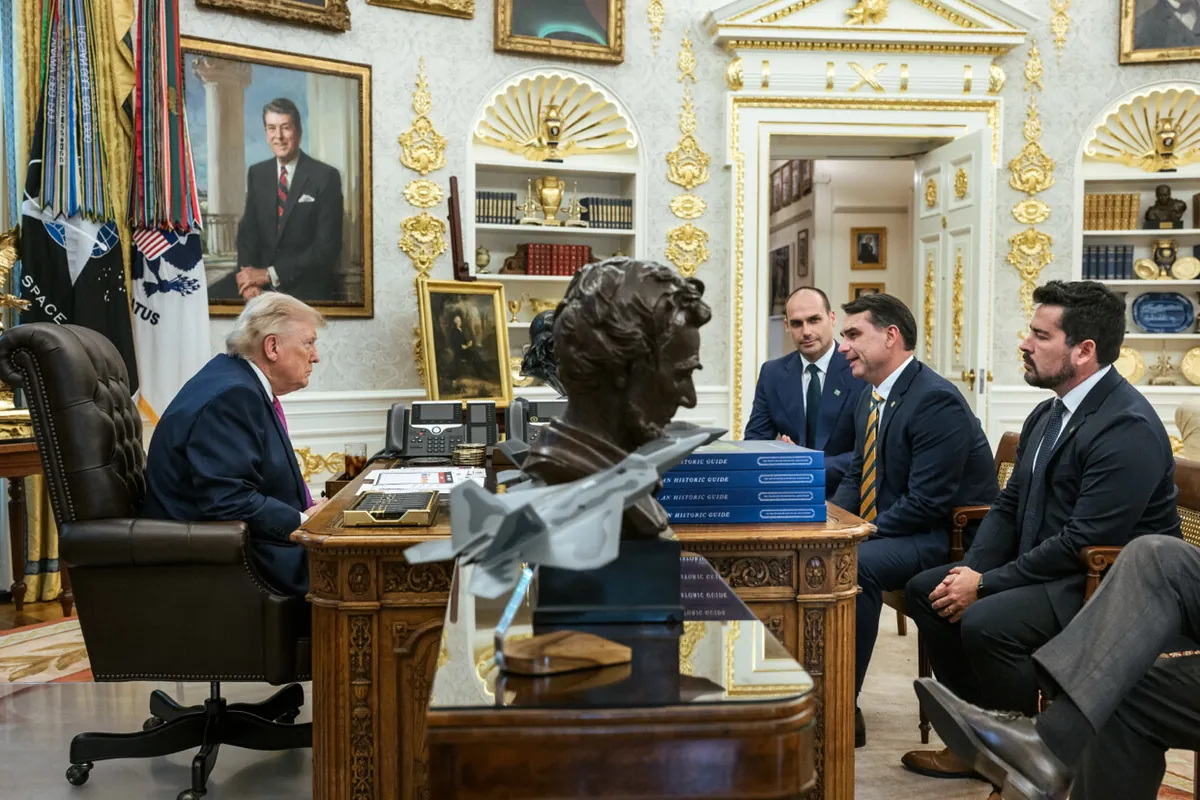
In 2025, in the United States, Eduardo worked with Paulo Figueiredo and other contacts to bring his father's situation to the world's attention. In May 2026, the two met with Donald Trump in the Oval Office.
In an interview with Record News, Eduardo said that what mattered was getting it solved, not who would get the credit. The line is worth something precisely because wanting recognition for the work is natural to his temperament; putting the work ahead of the credit, on the other hand, is something one learns.
Choleric-Sanguine
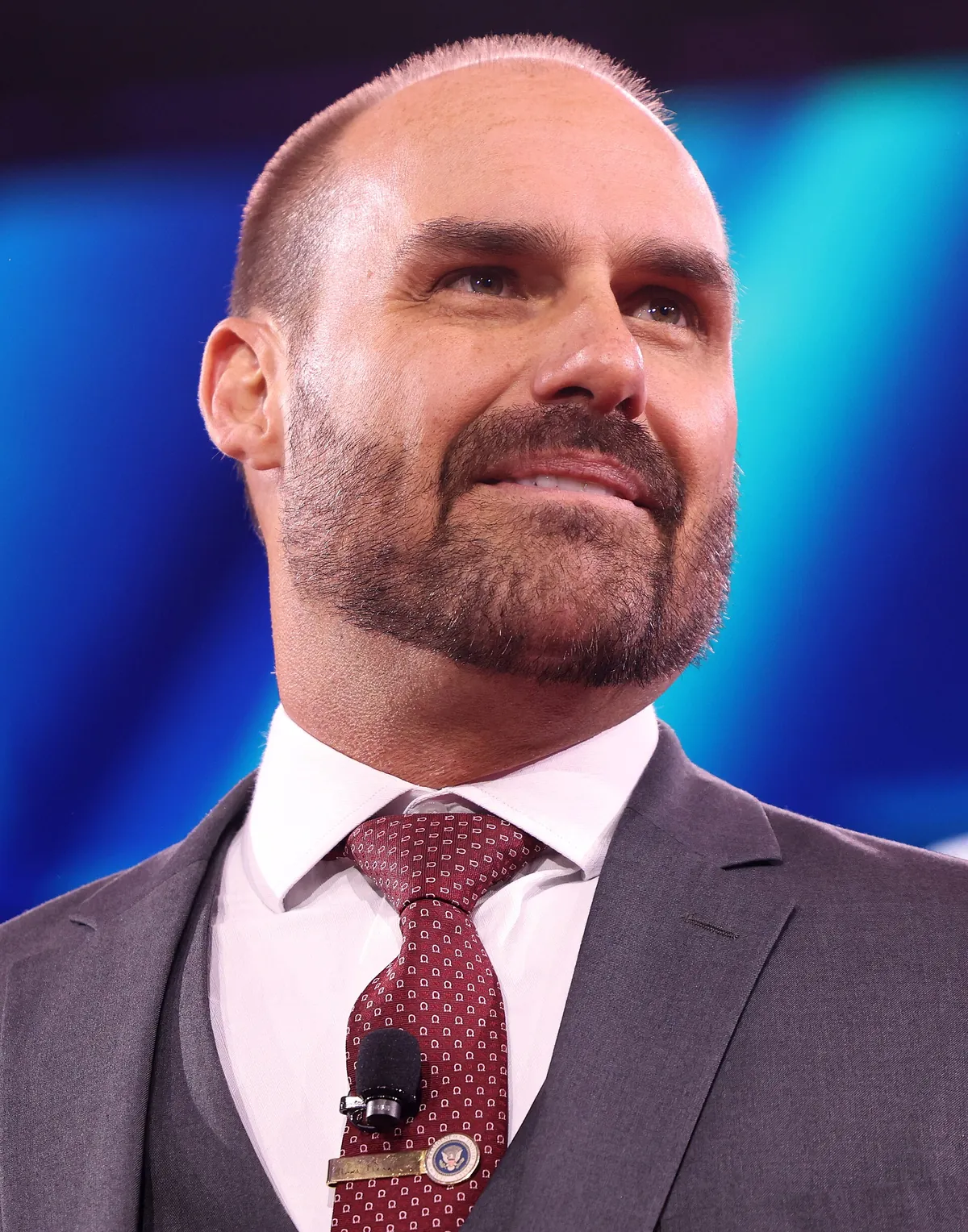
By Axis Ratio, the most coherent reading of Eduardo Bolsonaro's life is that he is choleric-sanguine.
The choleric gives the direction, with the strength to face what is hard and make things happen; the sanguine comes to serve that strength, bringing people, enthusiasm, and warmth. That's why, wherever he arrives, the whole group ends up set in motion.
In the choleric-sanguine, strength is what governs, and joy and people work for it.
The marks of the choleric genus

Every choleric has a natural inclination toward the arduous, and in Eduardo it shows up like this:
- A taste for challenge: he went into politics knowing what his father and brothers were going through.
- Determination: he traded the beach for the books and passed the Federal Police exam.
- Initiative: he went to the United States to seek support for his father and made it to the Oval Office.
- Gets up fast: he missed the entrance exam, went surfing, and got into UFRJ.
In every one of these episodes, the hard thing didn't stop him; on the contrary, it was what set him in motion.
The marks of the Choleric-Sanguine
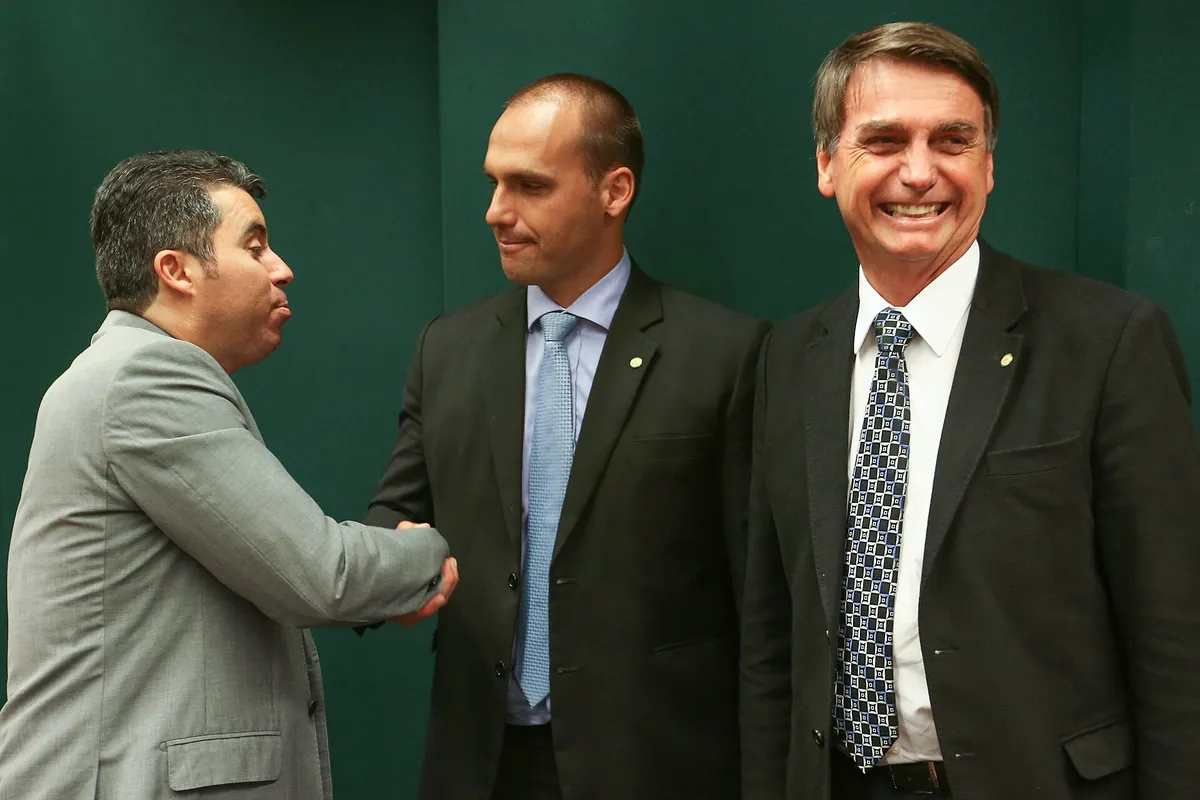
In the choleric-sanguine, strength gains people. In Eduardo:
- Mobilizer: he brought together an American organization and a Brazilian foundation to make CPAC happen.
- Pulls the group together: the soccer team and the rides in college, the house with his colleagues on the border.
- Cheerful and outgoing: he shows his modeling album laughing and proposes to his fiancée on stage.
- Contagious enthusiasm: he took almost two million voters with him in 2018.
That's why almost nothing he built was done alone, and it was precisely the company that took the work further.
The strength that brings people together
From all these episodes, what remains is a man whose strength almost never walked alone: the boy who helped set up camp, the young man who gave rides, the clerk who traded the beach for the books, and the congressman who brought CPAC to Brazil.
Eduardo, may this strength, this spirit, and this enthusiasm keep leading Brazil in the hope of a better future, out of the clutches of communism. Hope does not disappoint.
@bolsonarosp, do you recognize yourself in this reading?