
What is Frei Gilson's temperament?
At 12, he brought a woman with two small children home and told his mother: "I'll take care of them." Today, more than a million people pray the Rosary with him at 4 in the morning.

He was left alone in a boarding house
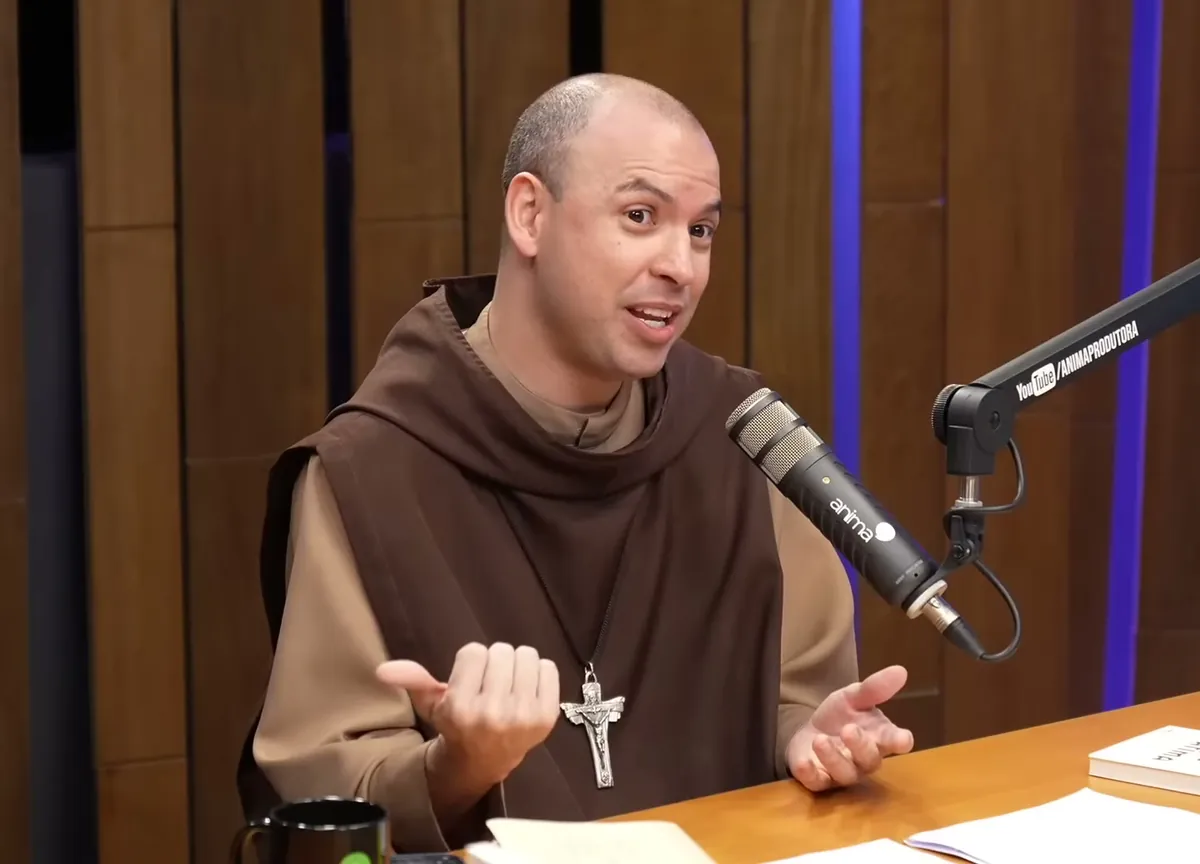
Gilson da Silva Pupo was born in São Paulo in 1986. After his parents separated, he wanted to stay with his grandmother, but his mother took him to live with her in a tiny boarding-house room, with the bathroom outside. "My mother left early for work and I stayed alone," he told the Anima podcast.
His refuge was a friend's house, where he played soccer and video games: "There I had presence, there I had company." In his temperament, loneliness weighed more than the lack of comfort, and the boy would go looking for people wherever they were.
"Mom, I'll take care of them."

When he was 12, his mother, who worked with people living on the streets, came home and found a woman with two small children, one aged two and the other one, whom her son had brought in from the street. "Mom, please don't send them away," he asked. She answered that she worked and asked who would look after them. "Mom, I'm home, I'll take care of them."
According to his mother, he got up early, bathed and fed the children, who stayed with the family for six months. The example came from home, but, in his temperament, the initiative was the boy's: he saw the need, took on the task and carried it out.
His stepfather won him over with the guitar

After his parents' separation, Gilson resisted his mother's new husband. Bernardo, the coordinator of a prayer group, looked for a way to get closer: he had hired a guitar teacher for himself and, seeing the boy sitting on a little stool watching the lessons, asked if he wanted to learn.
"To win me over, he played the guitar. He taught me the guitar. I learned very fast," the friar told SantoFlow. The resistance ended right there, and today he says he loves his stepfather "so much." In his temperament, the closeness came through something to do together, and the instrument became a bridge between the two.
Shy as he was, he had to sing in front of everyone

In the prayer group his mother started in Paraisópolis, Gilson only played the guitar, because he was "shy to the point of being unable to talk to anyone." When the woman who sang began to miss meetings, he had to play and lead on his own. "My conversion happens there, when I understand the responsibility of being in front of a people."
In his temperament, the shyness did not come from his nature: it came from the years of loneliness, and his ease stayed stored away as potential, waiting for a task to call it out. Called to lead, the boy who talked to no one began the path that today puts him in front of more than a million people.
At 14, he was already coordinating the group
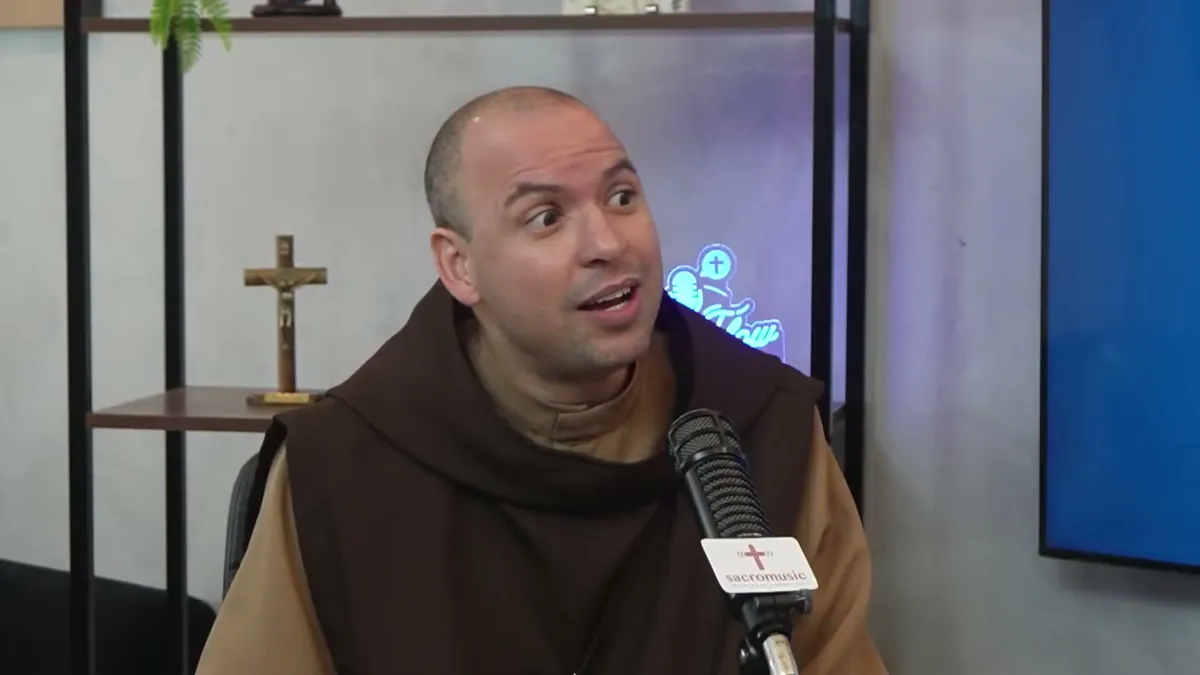
"At 14 years old I was already the group's coordinator, the group's preacher," he told Brasil Paralelo. He credits his conversion first "to the knees" of his mother: "Her Rosary for me, I'm sure it converted me."
The teenager who used to hide behind the guitar began to organize intercession and to preach, following what he had learned from his mother and stepfather. In his temperament, taking charge of a group was not a burden accepted for lack of anyone else, but the place where his strength began to be put to use.
He wanted to stay hidden
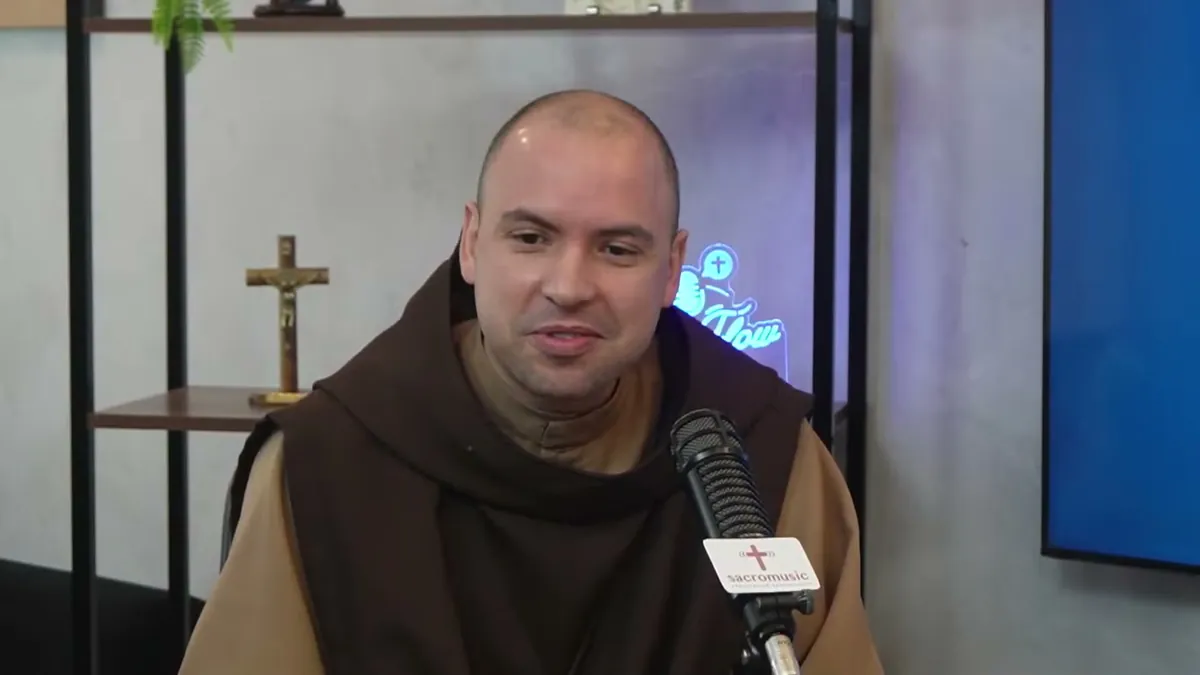
Gilson was already at the fifth vocational meeting of Canção Nova, "everybody liking me," when he told the priest who accompanied him that the charism was very oriented toward television and radio: "I want to stay hidden."
The priest sent him to visit the Carmelite Messengers of the Holy Spirit, and he went out of respect. "It was love at first sight." The friars warned him that there, those who played would not play and those who preached would not preach. "And I was ready, my heart was burning." In his temperament, a demanding life attracted him more than a comfortable path.
He thought about leaving several times
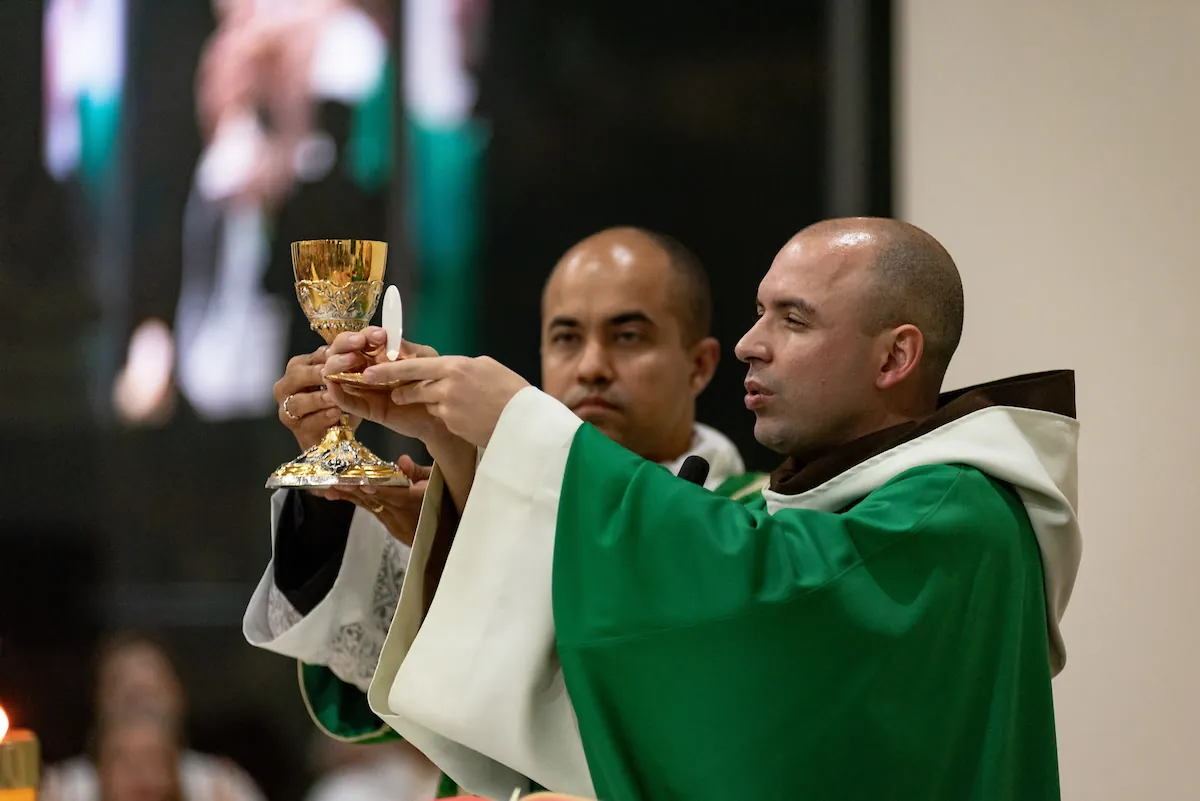
The convent was a place that slept little, worked hard and prayed hard. Gilson, who had arrived used to sleeping until noon, learned manual labor and even stayed up through nights to meet a goal, until he was told it had not been met and that he had to start over early.
He thought many times about leaving, but he stayed, and was ordained a priest in December 2013, at 26. In his temperament, difficulty was no reason to quit: it was a task to overcome, one day at a time.
He sang all day in a little tent

At the 2011 ExpoCatólica, the journalist Guto Azevedo from Ceará came across a seminarian with "a little guitar in a little tent." "He sang all day. If you walked by, he sang and prayed, sang and prayed," he recalled on SantoFlow. Almost no one stopped to watch.
Even so, the seminarian struck up conversations, asked where people were from and invited them to come back. In his temperament, a small audience did not lessen his effort, and each person walking down the aisle was someone to be reached.
"These songs have to become known."

Already a priest, Gilson composed but did not want to record. When Padre Edmilson, from Canção Nova, insisted that the songs were beautiful, he answered: "Father, why record a CD? I don't want to become known."
The argument that won him over was not fame, but the work: "These songs have to become known." "Then I said: you've won me over." In his temperament, what moves him is the work that needs to reach people, and, faced with it, the wish to stay hidden had to give way.
Thirteen songs, and he sang one
On "Salvos pela Cruz" (Saved by the Cross), released in 2015, Gilson recorded at home, in the convent, and went looking for the musicians and voices. He asked Juninho Cassimiro to sing the compositions, and his friend Daiane sang three others. "With great difficulty they convinced me to sing one, and I sang 'Eu Seguirei' (I Will Follow)."
It was precisely the one that took off the most. Today, on his channel, the acoustic version of "Eu Te Levantarei" (I Will Lift You Up) alone passes 74 million views. In his temperament, making the work happen included gathering the right people for each part.
He called Germany

For the recording of the DVD 360°, in 2023, Frei Gilson wanted to bring together those who had started with him. He called Juninho back, who "was part of the beginning," and phoned Bruna, who had married and moved to Germany: "I think you're part of this story. Would you leave Germany and come to Brazil just to record this DVD?"
She got time off from her job and came. In his temperament, the new work did not erase the people who built it, and the larger project brought along those who were there from the first hour.
He confessed that he worked too much

At the start of his ministry, when the music was reaching social media, Frei Gilson brought an unusual sin to confession: "I've been working a lot for God, I've been evangelizing a lot, but I feel I've stopped praying."
His confessor recommended the book "A Alma de Todo Apostolado" (The Soul of Every Apostolate), which made him rethink his path: "The apostolate is important, but more important than the apostolate is prayer." In his temperament, strength goes naturally to the work, and he had to learn to put prayer before work.
He traded sleep for the Rosary
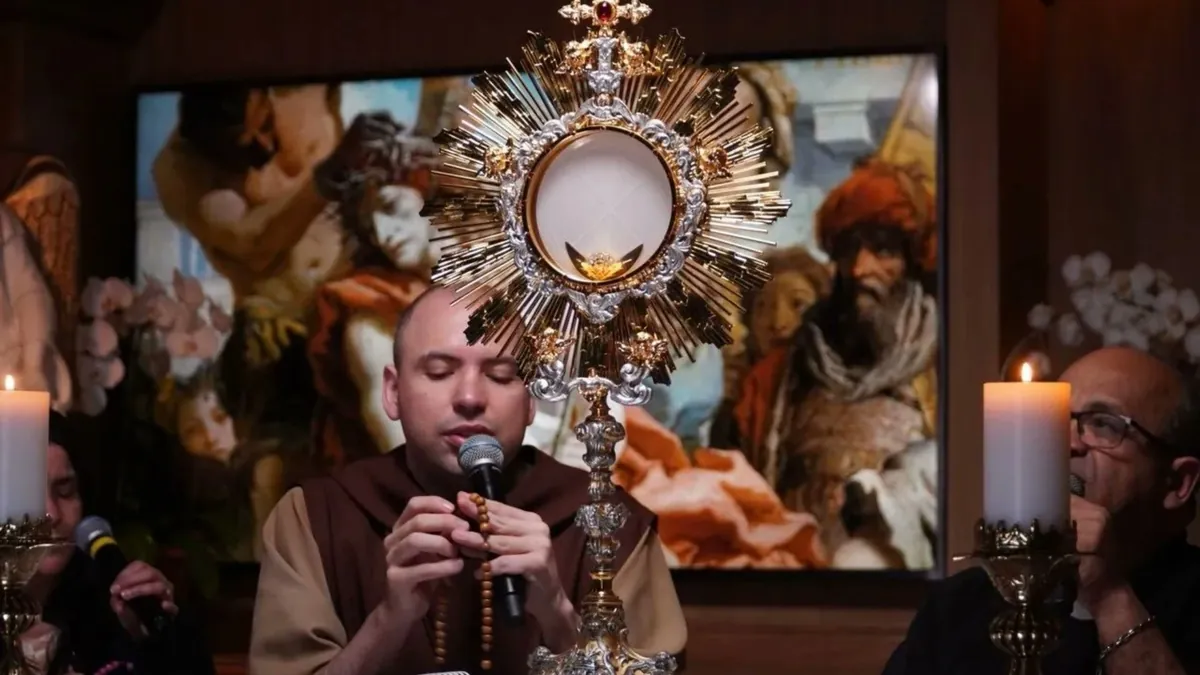
One Lent, when he had already been a priest for some years, Frei Gilson got tired of giving up only sweets and soda. "I need to do something that costs me more," he thought. "What costs me a lot is sleep, sleeping. I love sleeping."
He decided to pray the Rosary at 4 a.m., before the Blessed Sacrament, for the 40 days. His superiors doubted: some said he wouldn't manage, others that no one would show up at that hour. "It's my penance, if anyone comes in, it's a bonus." Sleep cost him, but, in his temperament, there is energy, enthusiasm and motivation to spare to carry out what he sets out to do, and, since that first Lent, he has kept every one of the 40 early mornings.
A thousand people at two in the morning
The idea of broadcasting came earlier, at an adoration at 2 a.m., when he opened a live on Instagram filming only the Blessed Sacrament: "A thousand and some people showed up, two in the morning, without me saying anything." He expected 3,000 at the Rosary; 30, 40, 50 thousand came.
In February 2026, according to Jovem Pan, the first day of Lent passed 1.1 million people at the same time. "When I see someone saying 'that song changed my life,' then I say: it's worth it." In his temperament, the fruit in other people's lives is what pays for the effort.
"I married my father."
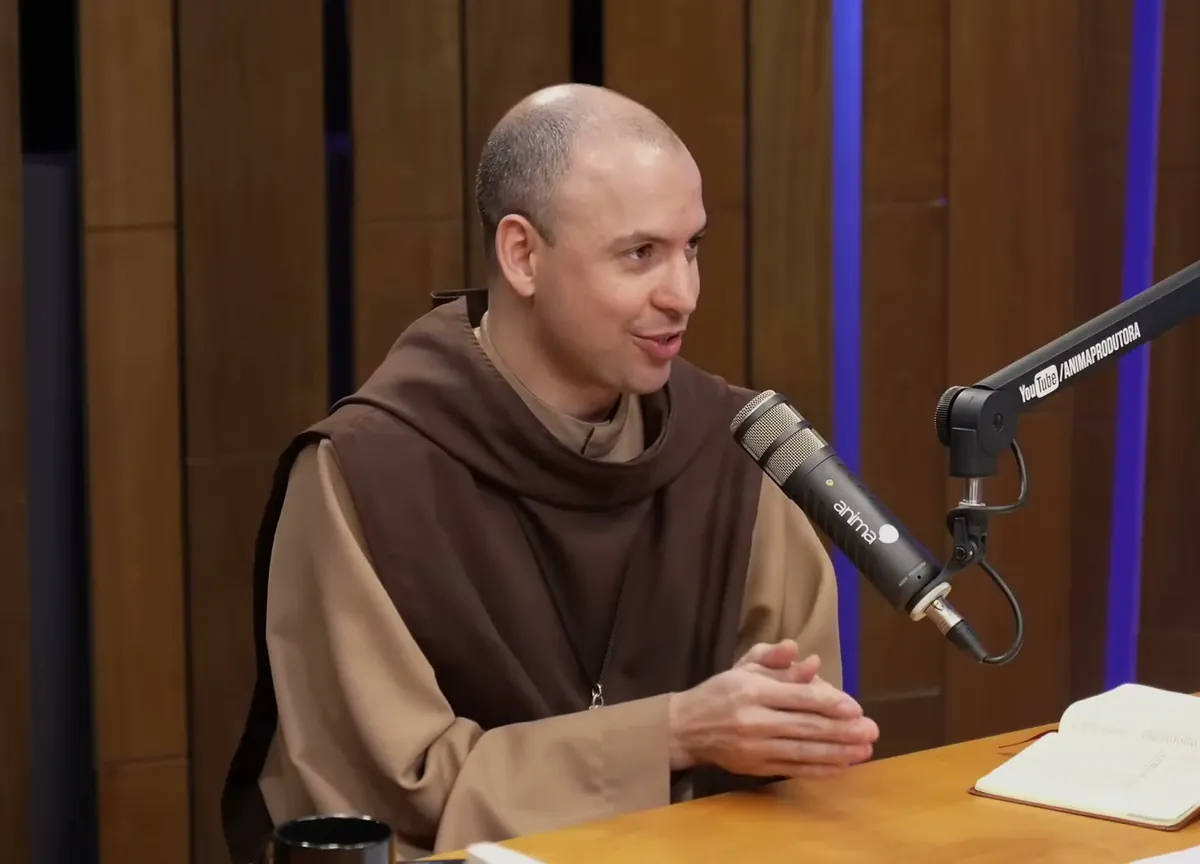
Frei Gilson's father had lived for more than 20 years with his partner without being able to marry in the Church. "I marry so many people, I get so many people married, there's no way I won't help my father," he thought. He went in person to the ecclesiastical tribunal to understand the process, as a son, and followed the case.
In the end, he himself celebrated the wedding: "Look at that, I married my father! It was a blessing." In his temperament, faced with a problem no one was solving, the answer was the usual one: step in, understand the way and make it happen.
Choleric-sanguine
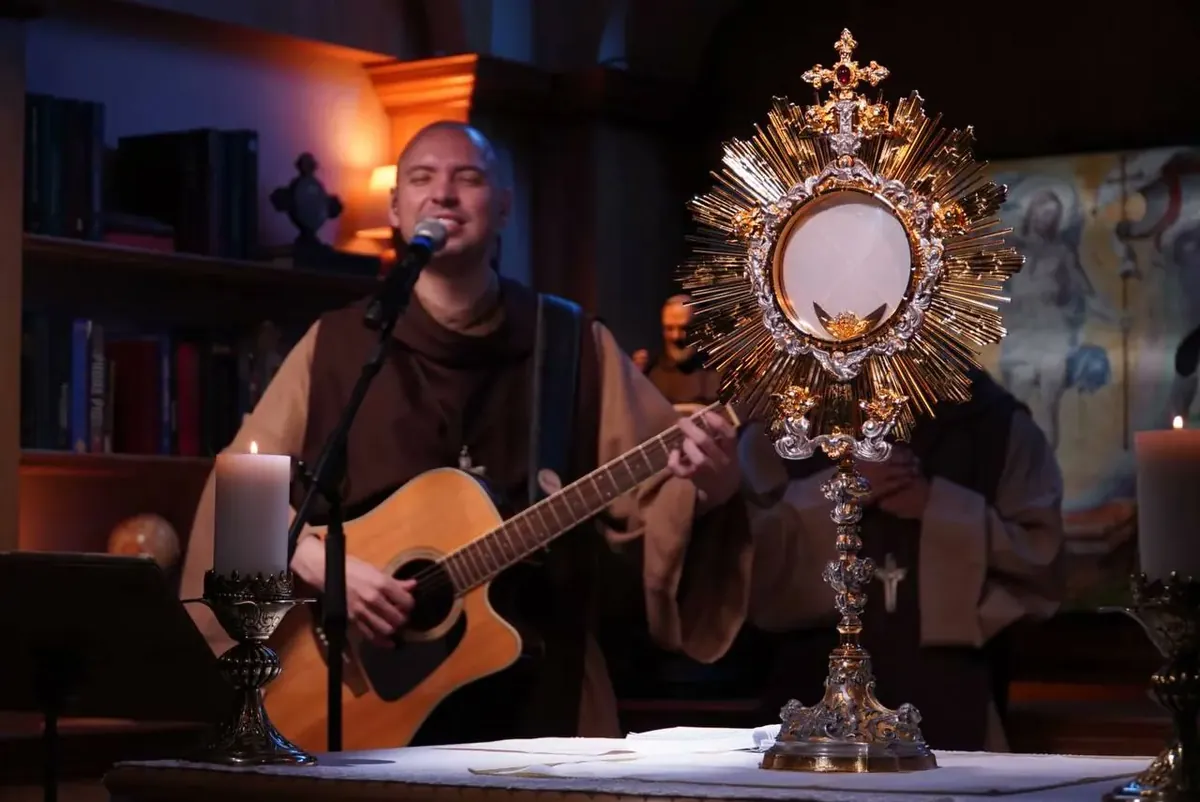
According to the Axis Ratio, Frei Gilson is choleric-sanguine.
The choleric strength goes ahead: the boy who said "I'll take care of them," the shy one who took over the group, the penance chosen because it was hard, the tribunal faced for his father. The sanguine side gives this strength people and warmth: the childhood friend, the singers gathered for the first CD, the call to Germany, the Rosary prayed with millions. In him, the work was never solitary.
The symbol of the choleric-sanguine is plasma: the energy of lightning spreading into light all around without losing its direction.
The marks of the choleric gender

Every choleric is mobilized by difficulty, and in Frei Gilson it shows up like this:
- Initiative: at 12, he brought in from the street a mother with two children and took on their care.
- Responsibility: shy to the extreme, he took on the singing and, at 14, was coordinating the group.
- Response to challenge: he chose the penance that cost him the most, sleep.
- Determination: he thought many times about leaving the convent and stayed until ordination.
The marks of the choleric-sanguine

In the choleric-sanguine, strength gains warmth and reaches others. In Frei Gilson:
- Mobilizer: he went after musicians and voices to record the first CD.
- The work must reach people: he agreed to record when he heard that the songs needed to become known.
- Enthusiasm: "I got excited right away," he said about the invitation to watch Neymar play in Paris.
- People inside the work: he called back from Germany someone who had started with him.
FROM NOVEMBER 24 TO DECEMBER 1, AT 4 A.M.
Frei Gilson opens this Tuesday, November 24, the 7 Days of Prayer 2026: the Rosary at 4 a.m., right after Mass, live on his channel, until December 1. According to Crux, he was the most-watched streamer in Brazil in 2025, with more than 153 million hours, ahead of any gaming channel.
I am also one of those who wake up in the early morning to pray some of these Rosaries. Frei Gilson, do you recognize yourself in this portrait?